

New in RegTech:
Rule 13f-2 and Form PF Deadline Extensions; Redefining UK Retail Disclosures; Data Insights: Biodiversity, Ultra-long Bonds, Tariffs
Rule 13f-2: In the US, a temporary reprieve for short-selling disclosures
On February 7, 2025, the SEC announced a temporary exemption from compliance with Rule 13f-2 and reporting on Form SHO, whereby institutional investment managers must disclose their short positions meeting certain thresholds. Originally due by 14 February 2025, initial reporting is now due by February 17, 2026 (covering the January 2026 reporting period).
The exemption grants managers more time to address outstanding operational and compliance questions, as well as to complete system builds and testing, following technical specifications that the SEC had released only recently. On December 16, 2024, the SEC had published the web-fillable version of Form SHO and related Form SHO XML technical specifications and EDGAR Filer Manual updates. This was immediately before the holiday season, as acknowledged by SEC Acting Chairman Mark Uyeda, and provided firms with a narrow window to integrate the specifications before reporting would have been required.
But now, the year-long compliance delay provides firms with much-needed time to refine their reporting workflows.
Importantly, the SEC reiterated its support for Rule 13-2 and Form SHO reporting generally, stating in its announcement, “Transparency is essential to well-functioning markets. And the Commission has stated the importance of providing more disclosure about short selling.”
For more insights on Rule 13f-2 -- the compliance delay, data issues, the current legal challenge, and how firms should position themselves -- see the recent piece in Traders Magazine, in which our own Greg Hotaling is quoted for his thoughts.
Form PF: New deadline, same compliance challenges for US private fund advisers
The SEC has pushed back its compliance date for amendments to Form PF reporting from March 12 to June 12, 2025. The amendments are designed to enhance systemic risk monitoring by requiring that reporting parties -- certain SEC-registered private fund advisers -- provide more detailed information on matters such as complex fund structures and counterparty exposure.
As with the SEC’s Rule 13f-2 compliance delay (see above), the Form PF compliance extension gives firms additional time to streamline data collection, integrate new reporting workflows, and address operational gaps. In both cases, those who proactively adjust their compliance processes now will be best positioned for a seamless transition. For more details on the changes required for amended Form PF reporting, see the analysis from our Kristin Ritsema, Executive Director of Compliance Services at Confluence.
Redefining retail disclosures: How the FCA’s CCI framework impacts the investment landscape
On 19 December 2024, the UK’s Financial Conduct Authority (FCA) published its highly anticipated consultation (CP24/30) on a new retail product disclosure framework for Consumer Composite Investments (CCIs). This marks a significant step in reshaping onshored EU disclosure regulations—such as PRIIPs and UCITS KID/KIID—toward a more flexible, consumer-focused approach.
While the proposed framework aims to resolve long-standing criticisms of the PRIIPs KID—particularly its complexity and rigid requirements—it signals an evolution rather than a revolution.
In our latest blog, Lewis Davison, Senior Product Manager, breaks down the key elements of the proposal, its scope, impact, and timing, along with essential considerations for firms affected by these changes.
“The FCA’s CCI framework marks a critical shift in retail investment disclosures, emphasizing clarity and consumer outcomes.”- Lewis Davison, Senior Product Manager
Read the full blog here, and explore the infographic for a snapshot of the consultation framework.
Global market & data insights: Biodiversity, ultra-long bonds, tariffs
Ever-changing, global policies and priorities impact financial firms tremendously, from their compliance requirements to their investment decision-making. In this edition, we peer briefly into the world of our Global Data Services team, who make it a practice to distill some of today’s most important -- or sometimes overlooked -- developments into actionable insights.
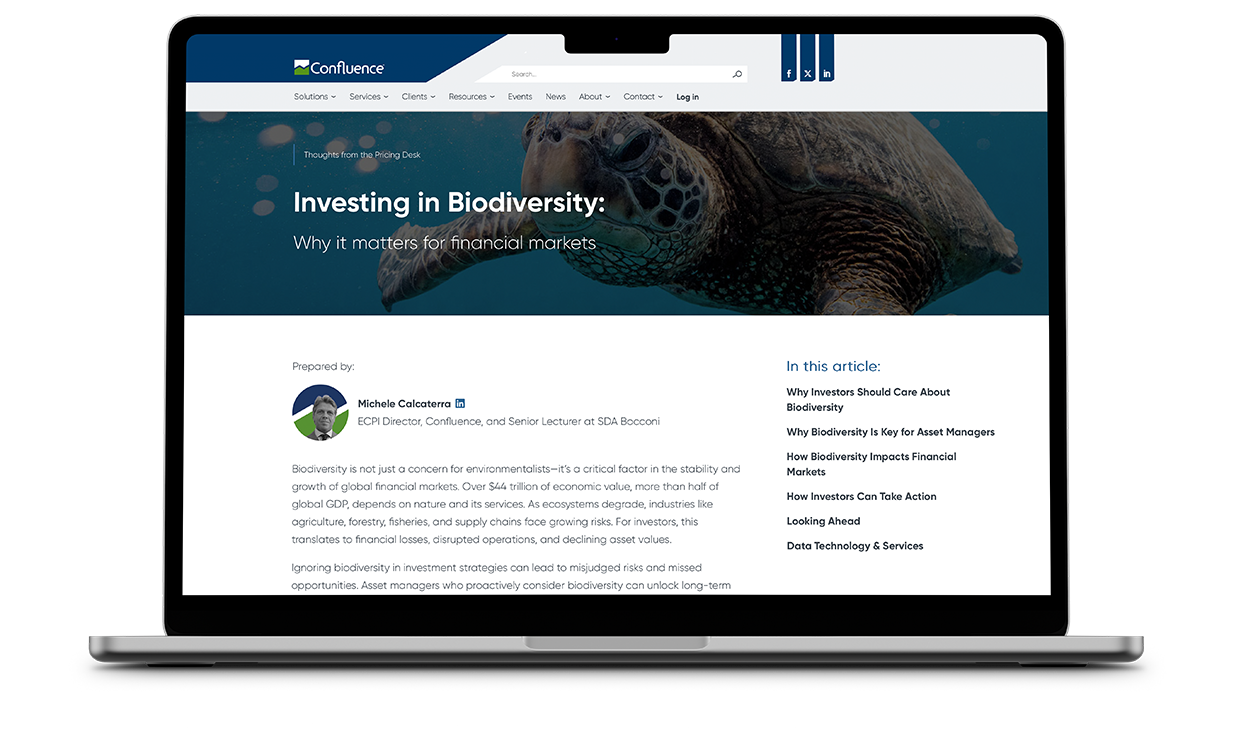
Investing in biodiversity: Why it matters for financial markets | Michele Calcaterra
"Biodiversity is not just a concern for environmentalists – it’s a critical factor in the stability and growth of global financial markets…”

The evolution of ultra-long bonds – A strategic asset for financial professionals | Cristina Stoian
"Ultra-long bonds provide a clear signal of how the US Treasury plans to manage its debt amidst shifting economic conditions…”
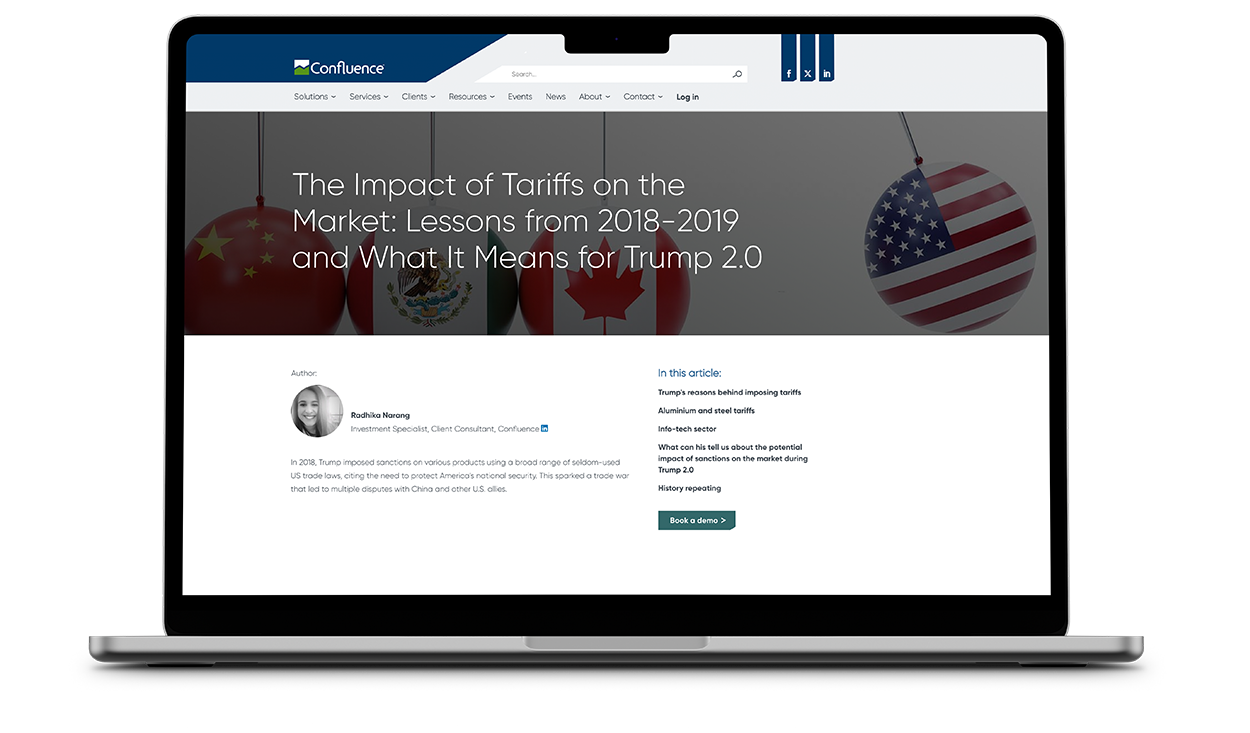
The impact of tariffs on the market: Lessons from 2018-2019 and what it means for Trmup 2.0 | Radhika Narang
"The 2018-2019 tariff war serves as a blueprint for what is currently underway and what could come next under President Trump 2.0…”
In this report:
- Rule 13f-2: In the US, a temporary reprieve for short-selling disclosures
- Form PF: New deadline, same compliance challenges for US private fund advisers
- Redefining retail disclosures: How the FCA’s CCI framework impacts the investment landscape
- Global market & data insights: Biodiversity, ultra-long bonds, tariffs
About Confluence
Confluence is a leading global technology solutions provider committed to helping the investment management industry solve complex data challenges across the front, middle, and back offices. From data-driven portfolio analytics to compliance and regulatory solutions, including investment insights and research, Confluence invests in the latest technology to meet the evolving needs of asset managers, asset owners, asset servicers, and asset allocators to provide best-of-breed solutions that deliver maximum scalability, speed, and flexibility, while reducing risk and increasing efficiency. Headquartered in Pittsburgh, PA, with ~700 employees in 15 offices across the United Kingdom, Europe, North America, South Africa, and Australia, Confluence services over 1000 clients in more than 40 countries. For more information, visit confluence.com