

February 2026
Factor Performance Analysis
AI Sell-Off, Mixed Factor Trends, and Canadian Market Outperformance
March 13, 2026
Prepared by:

Client Consultant, Confluence

Market background
Global equity markets displayed a shift in leadership dynamics during February. While the previous month was largely driven by Momentum and Volatility factors across most regions, February saw a more mixed factor environment, with performance drivers varying across markets. The period was also marked by a sharp sell-off in AI-related software stocks in the United States at the beginning of the month, which weighed on U.S. equity performance and disrupted the momentum trade. In contrast, Canadian equities emerged as the strongest-performing market among the regions analysed, highlighting the divergence in regional market dynamics during the period.
Crude oil prices continued to rise from the end of February, reaching $95 per barrel by the second week of March. The upward trend began toward the end of February, when prices climbed to around $69 per barrel, marking the start of the rally. Gold prices held steady above $5,180 per ounce in the second week of March, as investors weighed ongoing safe-haven demand against headwinds from a stronger dollar and rising bond yields.
Factor summary
- US Equities: Value and Yield outperformed.
- European Equities: Value, Yield and Quality outperformed.
- UK Equities: Size and Momentum outperformed.
- Emerging Markets Equities: Size and Momentum outperformed.
- Canadian Equities: Growth and Size outperformed.
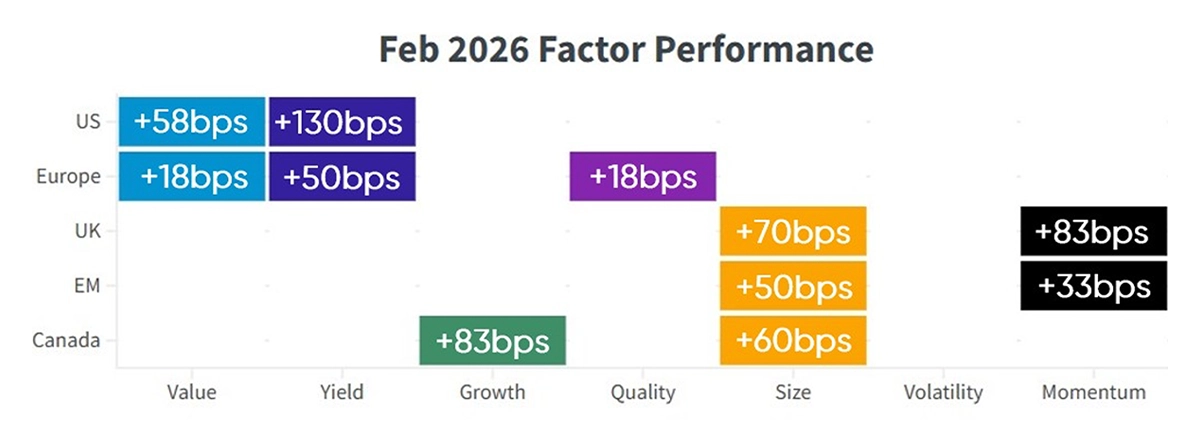
Figure 1: Regional relative factor performance (country and sector adjusted) for February 2026
Source: Confluence® Style Analytics®US equities
The U.S. equity market performance weakened in February, declining from a gain of 1.4% in the previous month to -0.4% this month. The shift largely reflects a change in the factor leadership that had previously supported market returns.
In the prior month, market performance was primarily driven by Momentum and Volatility subfactors, as investors navigated heightened policy uncertainty and attempted to capitalize on sharp market moves. During this period, mega-cap stocks that were already trending strongly continued to attract flows, reinforcing momentum-driven performance.
However, the start of February saw a sharp sell-off in AI related software stocks, which disrupted the momentum trade and led to a deterioration in the Momentum factor’s performance across the U.S. equity market. As uncertainty increased, investor positioning shifted toward Value and Yield-oriented stocks, reflecting a preference for companies with stronger valuations and income characteristics.
This rotation also contributed to significant underperformance in the Size subfactor, as mid and small-cap companies began to outperform while large cap stocks lagged. The broader market impact of the AI-driven sell-off further weighed on regional equity performance, as declining sentiment toward technology and software stocks dampened overall investor confidence.
The annual inflation rate in the United States remained stable at 2.4% in February 2026, unchanged from the previous month and broadly in line with market expectations. Meanwhile, the unemployment rate edged up to 4.4% in February, slightly higher than 4.3% recorded in January. On the production side, U.S. manufacturing output increased by 0.6% in January 2026, marking the strongest monthly rise since February 2025.
Stocks with high shareholder yield which contributed to the performance of U.S. equities in Feb include communication services company Netflix Inc (15% in Feb), and energy company Exxon Mobil Corp (9% in Feb). Additionally, companies with high earnings yield include consumer staples company Procter & Gamble Co (+10% in Feb) and health care company AbbVie Inc (4% in Feb).
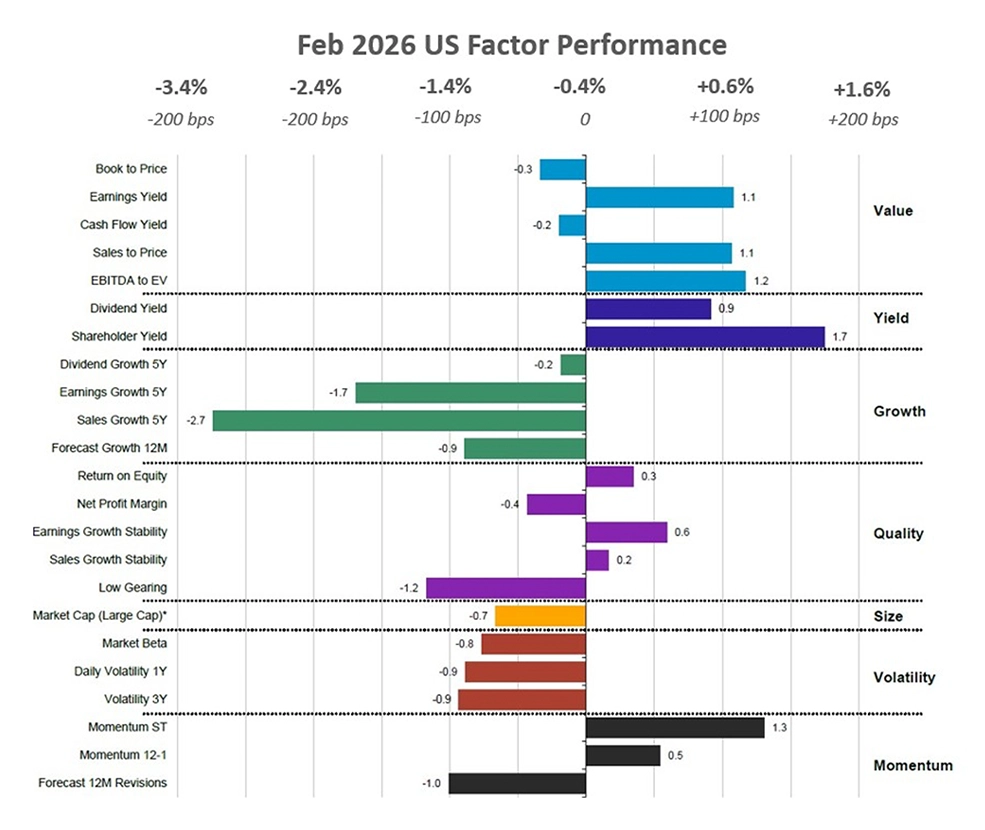
Figure 2: Feb 2026 US Factor Performance (sector adjusted)
Source: Confluence Style AnalyticsEuropean equities
Similar to the United States, European equity markets experienced a moderation in performance compared with the previous month. Despite the slowdown, the region still delivered a positive return of approximately 2.8% in February.
Market leadership during the month was largely driven by Quality, Value, and Yield subfactors, reflecting investor preference for companies with attractive valuations, and stable income characteristics. In contrast, Momentum and Volatility factors saw a notable decline in performance, indicating a shift away from the trend-driven market environment observed in the prior month.
A similar change in factor dynamics was also visible within the Growth and Quality segments, where leadership rotated as investors reassessed positioning amid evolving market conditions.
While the U.S. market saw underperformance in the Size factor with small and mid-cap stocks outperforming large caps. European markets displayed the opposite trend. In Europe, investor positioning shifted toward large-cap companies. European large caps have generally remained favored, partly because investors tend to allocate capital to large, liquid companies first before moving into smaller stocks.
The inflation index in the Euro Area rose by 0.7% month-over-month in February 2026. On the industrial side, manufacturing production in the Euro Area increased by 1.4% in December 2025, indicating continued improvement in the region’s manufacturing activity.
Key European stocks with strong Sales Growth Stability that outperformed in the month of Feb include German comm services company Deutsche Telekom AG (+20% in Feb) and French Industrials company Schneider Electric SE (13% in Feb). Leading the market through a strong dividend yield performance in the region include German financials company Allianz SE (2% in Feb) and Italian utilities company Enel SPA (9% in Feb).
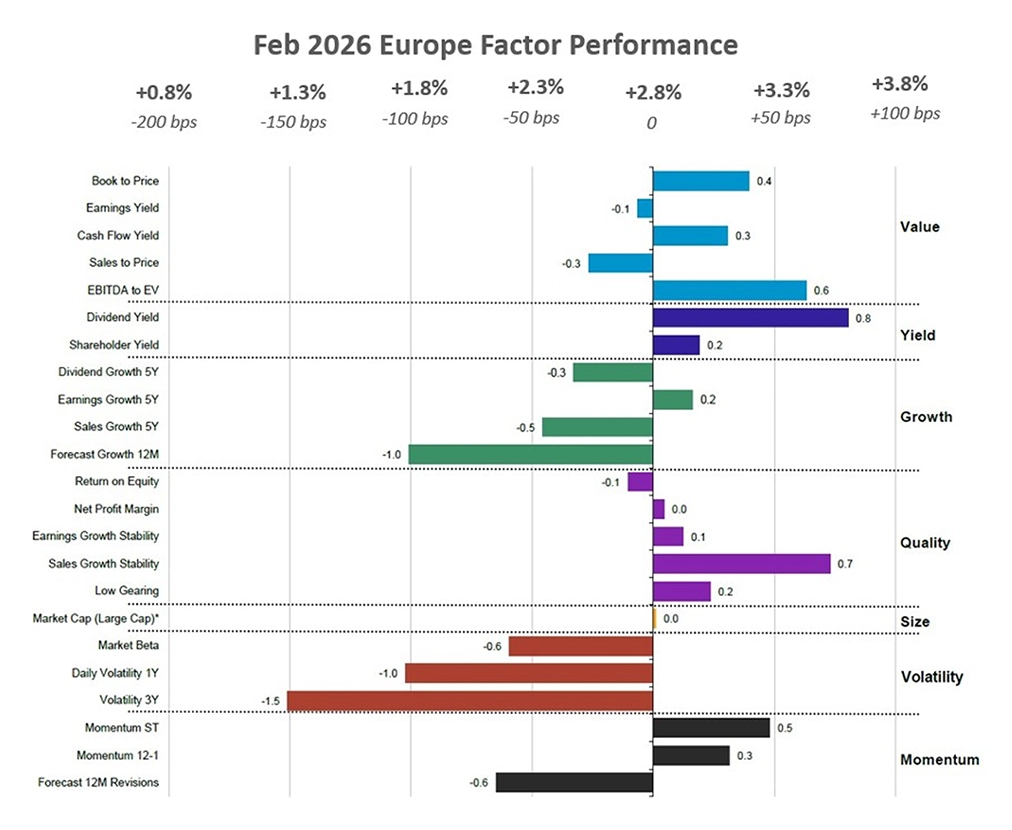
Figure 3: Feb 2026 Europe Factor Performance (country and sector adjusted)
UK equities
In contrast to the weaker performance observed in other developed markets such as the U.S. and Europe, the UK equity market delivered stronger returns in February compared to the previous month. The region’s outperformance was primarily driven by Size and Momentum factors during the period.
While Volatility factors reversed their previous trend, Momentum continued to outperform, extending the leadership it demonstrated in the prior month. Alongside Momentum and Size, the Quality and Growth factor also contributed positively, further supporting the region’s overall performance.
This month, investors rotated into large, financially strong companies in defensive sectors, many of which were already trending upward. The combination of earnings stability, sector composition of the UK market, and global rotation away from tech stocks reinforced both Momentum and Quality factor performance.
The Consumer Price Index in the UK declined by 0.5% month-over-month in January 2026, marking the largest monthly decrease since January 2024. Meanwhile, the UK unemployment rate increased to 5.2% in the three months ending December 2025. On the production side, manufacturing output fell by 0.5% month-on-month in December 2025, indicating a slight contraction in the sector.
British stocks with strong short-term momentum that outperformed this month include health care company GSK PLC (+16% in Feb); consumer staples company Unilever Plc (+9% in Feb). Stocks that led the region’s ROE factor’s outperformance include – financials company like HSBC Holdings PLC (6% in Feb) and energy company Shell PLC (9% in Feb).
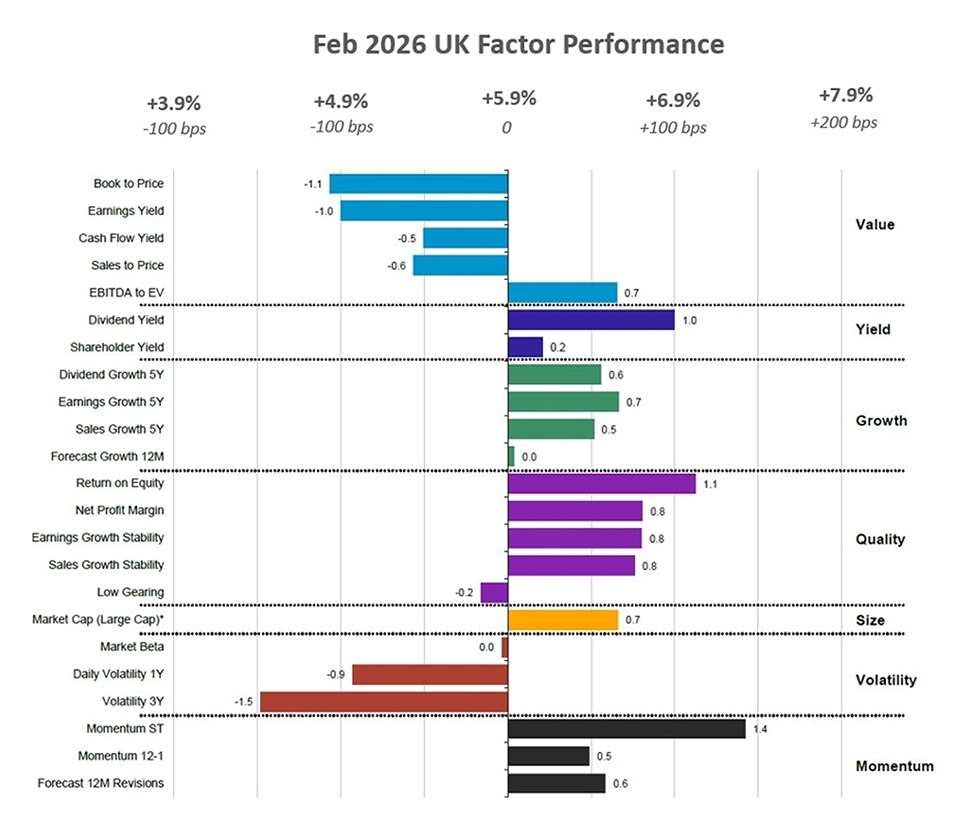
Figure 4: Feb 2026 Factor Performance (sector adjusted)
Source: Confluence Style AnalyticsEmerging market equities
Although Emerging Markets continued to outperform their developed market counterparts, overall performance moderated compared to the previous month, with the region delivering a return of approximately +6.8% in February.
In terms of factor trends, Volatility subfactors reversed their previous momentum and underperformed during the month. In contrast, Size and Momentum factors maintained their leadership, continuing the outperformance observed in the prior period. While most Quality subfactors performed well relative to the market, the overall contribution from the Quality factor was partly weighed down by weaker performance in Return on Equity (ROE) and Net Profit Margin metrics.
Momentum outperformed as stocks that had been trending upward continued to attract investor flows. Some previously sold-off equities also retained strong technical trends, allowing momentum strategies to capture rebounds. Additionally, rising commodity prices provided a tailwind for companies with strong relative strength, further supporting the factor’s performance.
China’s annual inflation surged to 1.3% in February 2026, up from 0.2% in January, while the surveyed urban unemployment rate remained at 5.1% in December 2025. In India, the Consumer Price Index rose 3.2% year-over-year in February 2026, and the unemployment rate increased to 5.0% in January 2026 from 4.8% in December. Taiwan saw its annual inflation rate climb to 1.8% in February 2026, with the seasonally adjusted unemployment rate edging up slightly to 3.4% in January 2026 from 3.3% in December.
Emerging Markets equities that outperformed in the month of Feb, captured by the forecast 12M revisions, include a Taiwanese info tech company Taiwan Semiconductor Manufacturing Co (13% in Feb); and Indian financials company State Bank of India (13% in Feb). Companies with progressing forecast growth in this month include Indian energy company Reliance Industries Company (+1% in Feb) and Chinese financials company China Merchants Bank Co Ltd (2% in Feb).
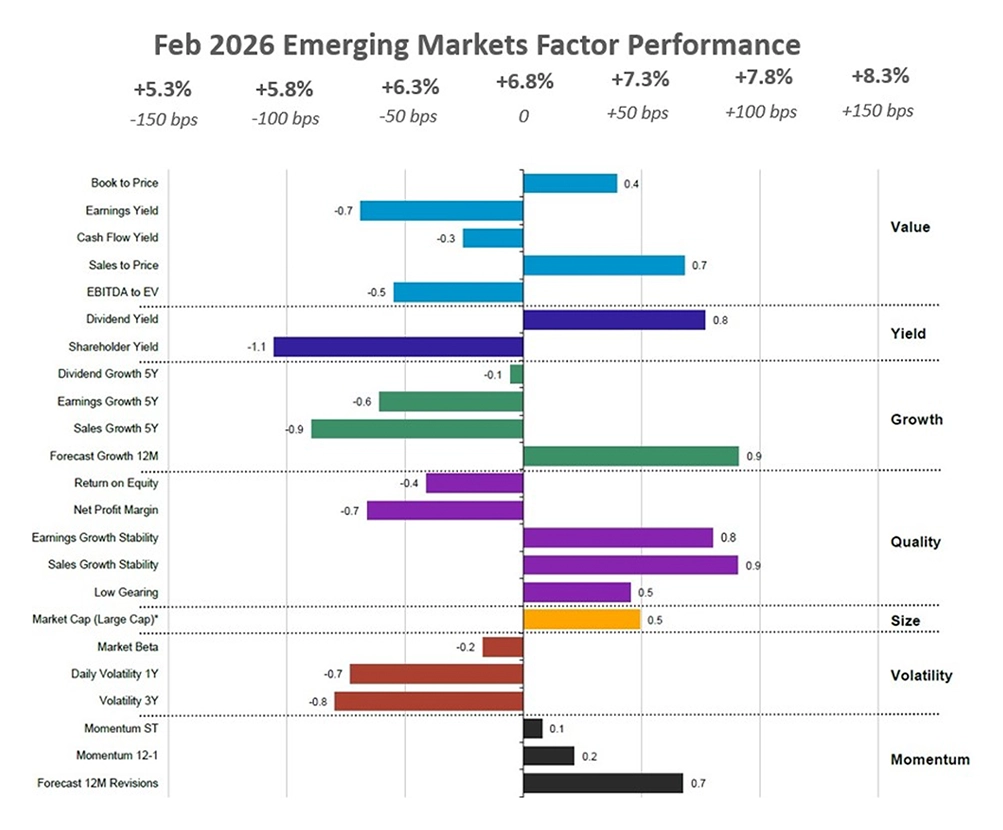
Figure 5: Feb 2026 Emerging Factor Performance (country sector adjusted)
Source: Confluence Style AnalyticsCanadian equities
The Canadian equity market delivered strong performance in February, outperforming most developed and emerging markets and improving from a 2.3% return in the previous month. This outperformance was largely driven by Sales Growth (5Y), which emerged as the leading factor supporting market returns during the period. The region’s performance was further supported by Quality and Value factors, reflecting investor preference for companies with strong fundamentals and attractive valuations. As global markets experienced increased volatility and a rotation away from high-growth technology stocks, Canadian equities benefited from this factor environment.
Compared with the previous month, Momentum, Yield, and Volatility factors weakened in performance, similar to trends observed in other regions. In contrast, the Quality factor exhibited a reversal in trend in the opposite direction, showing improved performance during the period.
The Consumer Price Index (CPI) in Canada remained unchanged at 165 in January, while the unemployment rate declined to 6.5% in January 2026, down from 6.8% in the previous month.
Stocks with strong earnings yield in the region include financials companies Toronto-Dominion Bank (+4 % in Feb), materials company Agnico Eagle Mines Ltd (+31% in Feb). High Sales Growth 5Y stocks that contributed to the region’s performance include energy company Enbridge Inc (8% in Feb) and financials company Canadian Imperial Bank of Commerce (9% in Feb).
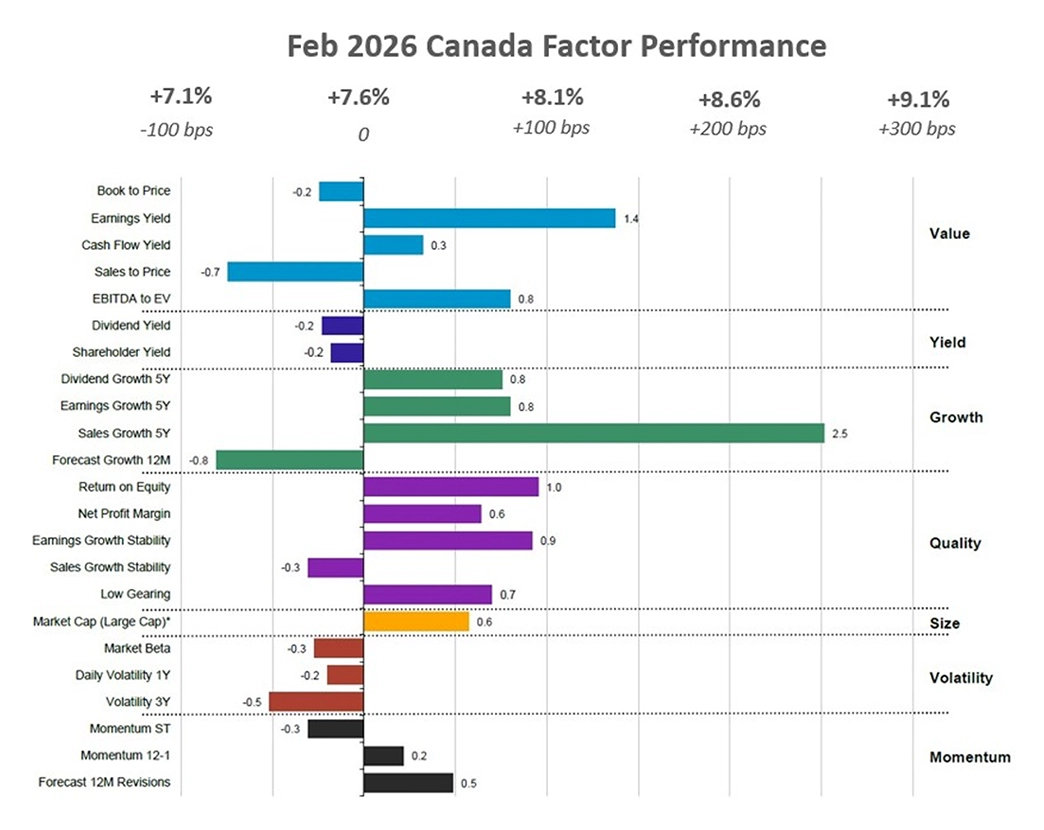
Figure 6: Feb 2026 Canada Factor Performance (sector adjusted)
Source: Confluence Style AnalyticsStyle Analytics
Style Analytics Fixed Income is now available globally. To learn more or request a demo, click on the link below.
Appendix: How to read the charts
Each factor’s performance is based on the relative performance of its top 50% of stocks by market cap, compared to the overall market. The Size factor uses the top 70% of stocks as the only exception.
For example, for the book-to-price factor, we determine the period’s performance of the basket of stocks with the highest book-to-price values relative to the total market. Each factor is analyzed independently, market and fundamental data are adjusted to enable sector-average (within each country) relative data to be used, and the performance measurement isolates the factor’s contribution to return.
Disclaimer
The content provided by Confluence Technologies, Inc. is for general informational purposes only and does not constitute legal, regulatory, financial, investment, or other professional advice. It should not be relied upon as a substitute for specific advice tailored to particular circumstances. Recipients should seek guidance from appropriately qualified professionals before making any decisions based on this content.
Unless otherwise stated, Confluence Technologies, Inc. (or the relevant group entity) owns the copyright and all related intellectual property rights in this material, including but not limited to database rights, trademarks, registered trademarks, service marks, and logos.
No part of this content may be adapted, modified, reproduced, republished, uploaded, posted, broadcast, or transmitted to third parties for commercial purposes without prior written consent.
About Confluence® Technologies
Confluence is a global leader in enterprise data and software solutions for regulatory, analytics, and investor communications. Our best-of-breed solutions make it easy and fast to create, share, and operationalize mission-critical reporting and actionable insights essential to the investment management industry. Trusted for over 30 years by the largest asset service providers, asset managers, asset owners, and investment consultants worldwide, our global team of regulatory and analytics experts delivers forward-looking innovations and market-leading solutions, adding efficiency, speed, and accuracy to everything we do. Headquartered in Pittsburgh, PA, with over 700 employees across North America, the United Kingdom, Europe, South Africa, and Australia, Confluence services over 1,000 clients in more than 40 countries.
For more information, visit confluence.com