

A New Day Might Rise
for India-Middle East-Europe
Economic Corridor
Author:

MD Valuations, Deputy Manager FI Valuations, Confluence Global Data Services

The India-Middle East-Europe Economic Corridor (IMEC) is a major new trade and infrastructure initiative with the potential to reshape regional connectivity. Signed on September 9th, 2023, the IMEC aims to bolster economic development by fostering connectivity and integration between Asia, the Persian Gulf, and Europe. Shared economic interests could provide a multilateral basis for dialogue and cooperation across continents, despite the region's current political instability.
Beyond moving goods and energy, IMEC may represent a meaningful evolution in the investment landscape. The corridor integrates digital infrastructure, including high-capacity fiber-optic cables and data hubs, and is poised to become a strategic platform for data-driven investments. Investors increasingly view digital infrastructure as a core asset class, and IMEC's potential to enable secure, high-speed data transmission across borders enhances its appeal to global capital markets.
The 4,800 km (3,000-mile) corridor proposes a route from India to Europe, passing through the UAE, Saudi Arabia, Israel, Italy, and Greece. Its goal is to establish a modern, integrated infrastructure that links South Asia to Europe without relying on Chinese capital or territory. Goods from India could travel westward via ports and rail networks across the Gulf and Israel, reaching European markets. Along this route, the corridor would connect digital cables, energy pipelines, and logistics hubs. These digital cables represent more than symbolic connectivity; they are critical to enabling secure data transfer, cloud infrastructure, and advanced analytics that underpin modern economies. As cross-border data flows grow in strategic importance, IMEC’s role in building resilient digital infrastructure is as vital as its physical infrastructure.
IMEC is positioned as a potential alternative to China’s Belt and Road Initiative (BRI), enabling the U.S. and its allies to enhance influence through trade and investment rather than military presence.
For the current U.S. administration, tangible trade infrastructure such as ports, pipelines, and data networks holds more value than traditional summits or long-term aid to uncertain allies. Peace and stability are widely regarded as prerequisites for sustained investment, and IMEC seeks to ease logistical bottlenecks. It should be noted that Russia and China have also long pursued energy and trade corridors in the same region.
India
India, now the world's fourth-largest economy, stands to benefit from increased access to Gulf and European markets, diversified energy partnerships, and greater geopolitical visibility. Yet, India must navigate rising security risks, maintain diplomatic neutrality, and build strong ties with regional players like the UAE. IMEC offers India an opportunity to diversify its strategic partnerships and reduce reliance on China-centric trade routes. Indian External Affairs Minister S. Jaishankar has likened IMEC’s potential impact to the Suez Canal, "Once it was done, you see what a profound impact it's had on the world. So, if we can pull that (IMEC) off, you will get from Europe a route all the way to the Pacific, which will be significantly land based, but partly sea based. We are making very major investments in railways and then trying to connect eastern India all the way to Vietnam."
Robinder Sachdev, a geopolitical and strategic affairs expert based in India, stated that, once built, the IMEC would cut transport times by up to 40 per cent, offering India more “cost-effective access” to European markets.
Middle East
Israel joined the IMEC to position itself as a transit hub via the Port of Haifa, enhancing its economic links with Europe and Asia. The 2020 Abraham Records marked a significant diplomatic shift in the Middle East by promoting trade, security, and technology cooperation between former adversaries. The October 7th, 2023, attack disrupted regional stability and paused momentum on normalization efforts. The Gulf capital paused, momentum on the Abraham Records significantly stalled, and the IMEC project was put on hold.
Tehran has frequently shown that it is able and willing to impede marine trade in the Gulf of Oman, the Bab el-Mandeb Strait, and the Strait of Hormuz—choke spots that immediately affect India's west coast export routes and the UAE's shipping infrastructure. A wider Iranian reaction may jeopardise Emirati vital infrastructure including ports, oil terminals, and airports, particularly if Tehran views IMEC as a component of a strategic encirclement supported by the US. The recent US-Israel military operation in Iran is trying to remove several impediments that halted IMEC and the Abraham Records.
The US and Saudi Arabia were said to be nearing a security agreement on May 3rd, 2025, that would entail US security assurances and the creation of a civilian nuclear program. Because it is home to land bridges that connect the ports of the United Arab Emirates with those of Jordan and Israel, Saudi Arabia plays a crucial role in the IMEC corridor. Saudi Arabia has currently committed $20 billion to the IMEC. This represents a fraction of the $600 billion the G7 has earmarked for global infrastructure investment by 2027.
Mehdipoor, Co-founder and Chief Innovation Officer at Ankaa, a firm specializing in infrastructure innovation and strategy, stated, "A trade corridor must be more than a highway. It must be a sensing network tracking carbon emissions, temperature, customs, and predictive delays. Only then is it future-proof. We want to plug every node-from ports to trucks to warehouses-into a unified data spine. That's how we move from trade route to trade intelligence.” With over 25 ports, 50 airports, and 15,000 km of highways, the Gulf Cooperation Council (GCC) stands as IMEC's natural logistics backbone.
Turki Alsubaihi, CEO of Public Transportation at SAPTCO, Saudi Arabia's Vision 2030, pointed to pioneering initiatives in hydrogen mobility and climate innovation, from hydrogen buses to floating industrial cities like Oxagon in NEOM. From Marseille's digital-ready port to the Gulf's intelligent platforms and regional ecosystems, this is no longer just about rerouting ships—it’s about redefining the infrastructure of global trade.
Europe
IMEC echoes the legacy of historic Eurasian trade routes that connected Asia and Europe from antiquity through the early modern period. Europe is increasingly vulnerable to supply chain disruptions from China, particularly in critical sectors like pharmaceuticals, rare earth elements, and advanced technologies. One of the solutions is the creation of an economic corridor that has an independent political and economic dimension. IMEC will help the European Union reduce reliance on the Suez Canal, cutting transportation costs and accelerating trade with India. IMEC could influence the distribution of economic activity within the EU, particularly by strengthening Southeastern trade hubs. When completed, this corridor will likely include three major Mediterranean ports: Marseille in France, Trieste in Italy, and Piraeus in Greece. Italy has recently appointed a a special envoy to oversee the country’s inclusion in IMEC while stressing the corridor’s role in plans to reach an export growth value of 700 billion euros in the near term. Late last year, Prime Minister Meloni stated Rome’s goal is to integrate Trieste into IMEC’s port system, emphasizing the importance of Italy’s nautical industry in the country’s economic future. In February 2025, Italy and the United Arab Emirates finalised a $40 billion deal aimed at deepening bilateral cooperation in infrastructure and trade. European Union Commissioner Ursula von der Leyen described IMEC as “a green and digital bridge across continents and civilisations,” highlighting its symbolic and practical ambitions.”
In Europe, Marseille port is evolving into a hub for logistics, green energy, and digital infrastructure. What’s new is the speed, safety, and intelligence required. “Marseille-Fos has shifted from petrochemicals to logistics, and now to a multi-energy, multi-modal hub," said Hervé Martel, Chairman of the Grand Port Maritime de Marseille (GPMM). "We are expanding container capacity, building green logistics zones, and connecting to the European hinterland via rail and river."
Digital Infrastructure and Investment Implications
As global markets increasingly rely on secure and rapid data transmission, IMEC’s inclusion of digital infrastructure is no longer ancillary, it’s essential. Fiber-optic cables and cross-border data flows form the backbone of modern trade, enabling everything from real-time inventory tracking to financial clearing systems. The ability to embed and control these flows represents a new frontier in economic competitiveness.
For investors, this opens a new category of infrastructure investment: data corridors. Asset managers, private equity firms, and sovereign wealth funds may find value in funding data infrastructure projects that promise returns through data leasing, cloud access points, and smart logistics ecosystems. Digital transparency and interoperability also support fintech expansion and enable high-frequency trading, automated compliance, and advanced analytics.
From a regulatory standpoint, regions like Europe stand to benefit from digital sovereignty, reducing reliance on third-country cloud providers and building secure, localized data ecosystems. This presents both a strategic advantage and an investable trend.
Conclusion
While regional tensions pose significant risks, IMEC represents a bold and modern approach to economic diplomacy. If successful, it could reshape global trade flows, reduce transport times by up to 40%, and unlock significant capital investments. Its realization depends on regional cooperation, infrastructure financing, and aligning multiple national interests into a cohesive, long-term vision. IMEC may serve as a catalyst for a more digitally integrated and resilient global economy by embedding digital connectivity alongside physical trade routes.
IMEC’s future depends on security, diplomacy, resilience, and the common goal to create jobs, reduce costs, and increase trade accessibility.
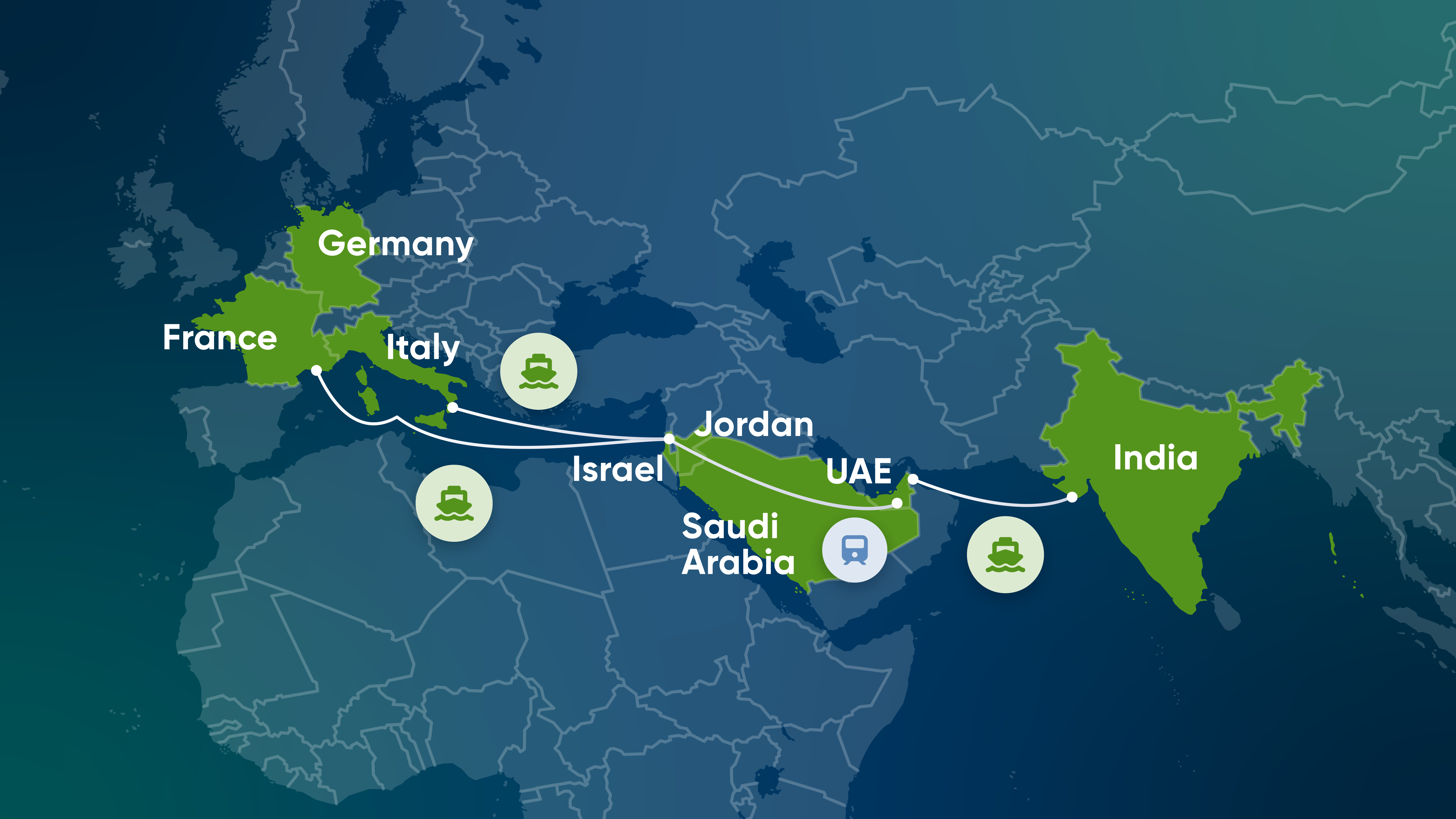
Figure 1: India-Middle East-Europe Economic Corridor
Source: The National NewsConfluence Technologies, Inc. is a trusted source for clean, high-quality data
Confluence is a global leader in data technology and services, offering quality aggregated data and sophisticated pricing solutions for a range of assets, including those that are complex or less liquid. Our extensive suite of solutions is designed to assist asset managers, asset owners, and investment service providers worldwide in making more informed decisions, helping manage risk, and more easily satisfying regulatory requirements.
We transform data challenges into actionable insights.
Disclaimer
The content provided by Confluence Technologies, Inc. is for general informational purposes only and does not constitute legal, regulatory, financial, investment, or other professional advice. It should not be relied upon as a substitute for specific advice tailored to particular circumstances. Recipients should seek guidance from appropriately qualified professionals before making any decisions based on this content.
Unless otherwise stated, Confluence Technologies, Inc. (or the relevant group entity) owns the copyright and all related intellectual property rights in this material, including but not limited to database rights, trademarks, registered trademarks, service marks, and logos.
No part of this content may be adapted, modified, reproduced, republished, uploaded, posted, broadcast, or transmitted to third parties for commercial purposes without prior written consent.
About Confluence
Confluence is a global leader in enterprise data and software solutions for regulatory, analytics, and investor communications. Our best-of-breed solutions make it easy and fast to create, share, and operationalize mission-critical reporting and actionable insights essential to the investment management industry. Trusted for over 30 years by the largest asset service providers, asset managers, asset owners, and investment consultants worldwide, our global team of regulatory and analytics experts delivers forward-looking innovations and market-leading solutions, adding efficiency, speed, and accuracy to everything we do. Headquartered in Pittsburgh, PA, with ~700 employees across North America, the United Kingdom, Europe, South Africa, and Australia, Confluence services over 1,000 clients in more than 40 countries.
For more information, visit confluence.com
You may also like: