

Q1 2026
Factor Performance Analysis
Global equities in transition: factor rotation and market weakness
April 13, 2026
Prepared by:

Consultant, Style Analytics®, a Confluence® brand

Market background
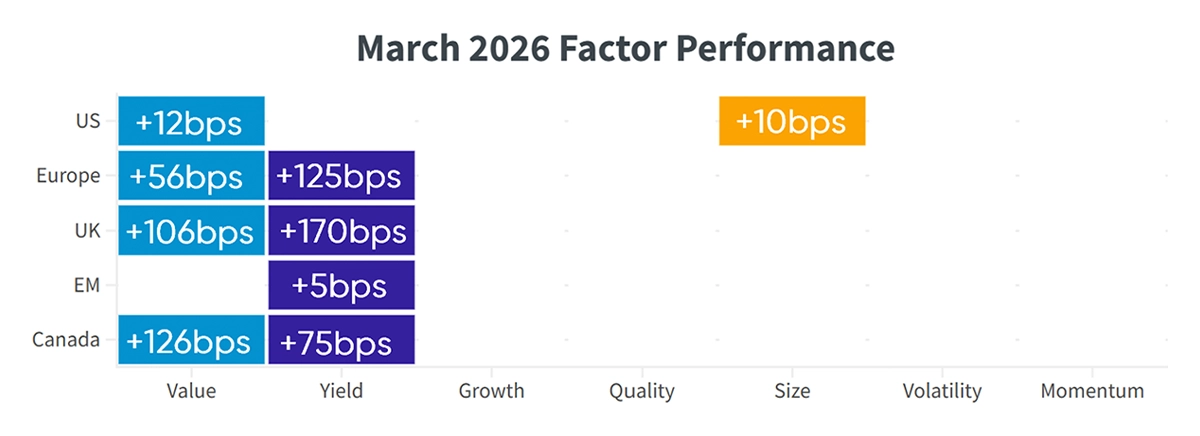
Global equity markets experienced broad-based weakness in March 2026, with all major regions declining amid a shift in investor sentiment toward a more risk-off stance. Concerns around inflation, monetary policy uncertainty, and slowing global growth weighed on performance, triggering a rotation away from higher-beta factors such as Momentum and Volatility toward more defensive areas including Value, Yield, and Quality.
Crude oil prices continued to climb from late February, reaching $103 per barrel by the end of March and extending gains into the second week of April. Meanwhile, gold prices remained elevated above $4,564 per ounce at month-end, though down from approximately $5,200 at the start of March, as higher interest rate expectations and a stronger U.S. dollar reduced its appeal despite ongoing market uncertainty.
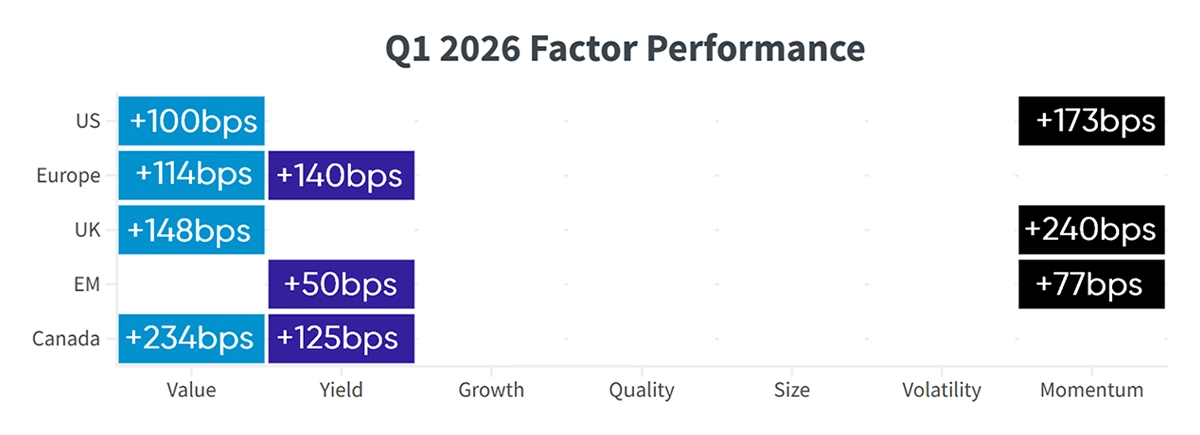
Factor summary - Q1
- US equities: Value and Momentum outperformed.
- European equities: Value and Yield outperformed.
- UK equities: Value and Momentum outperformed.
- Emerging markets equities: Yield and Momentum outperformed.
- Canadian equities: Value and Yield outperformed.
US equities
US equities experienced a challenging March, declining to -4.9%, weighing on the overall first-quarter performance of 2026. While the year began on a positive note, with January delivering a gain of around 1.4%, market sentiment weakened over the subsequent months. February and March reversed earlier gains, resulting in the US market ending Q1 2026 down approximately -4%.
From a factor perspective, leadership rotated notably over the quarter. January’s strength was driven primarily by Momentum and Volatility stocks, reflecting continued risk appetite and trend-following behavior. However, this dynamic began to shift in February, with Value stocks gaining traction as investors rotated toward more attractively priced segments of the market, while Volatility strategies underperformed. This trend became more pronounced in March, when broad-based market weakness saw most factors detract from performance. Despite this, Value remained relatively resilient, and the Size factor also modestly outperformed the broader market, indicating a growing investor preference for larger, more stable, and attractively valued companies amid increasing uncertainty.
The shift observed in February, which continued into March, was instrumental in shaping the overall performance factor for the region in Q1 2026. Momentum and Yield emerged as the key outperforming factors over the quarter. Although Yield underperformed the broader market in March, its strong performance in January and February more than offset this weakness, supporting its overall outperformance for the quarter. Yield stocks were supported by expectations of stable or easing interest rates, along with their relative valuation appeal compared to growth-oriented names. Additionally, early signs of a shift in investor sentiment toward more defensive, income-generating assets contributed to their outperformance in January and February.
US annual inflation is estimated to have risen sharply to 3.3% in March 2026 from 2.4% in February. Meanwhile, the unemployment rate declined slightly to 4.3% from 4.4%, and manufacturing output increased by 0.2% month-over-month in February, following a stronger 0.8% gain in January.
Stocks with high momentum short term which contributed to the performance of US equities in Q1 include info tech company Micron Technology, Inc. (18% in Q1), consumer staples company Costco Wholesale Corp (15% in Q1) and industrials company Caterpillar Inc. (24% in Q1). Additionally, companies with sales to price that contributed to the region’s performance in March include energy company Exxon Mobil Corp (11.25% in March) and info tech company Oracle Corp (1.2% in March).
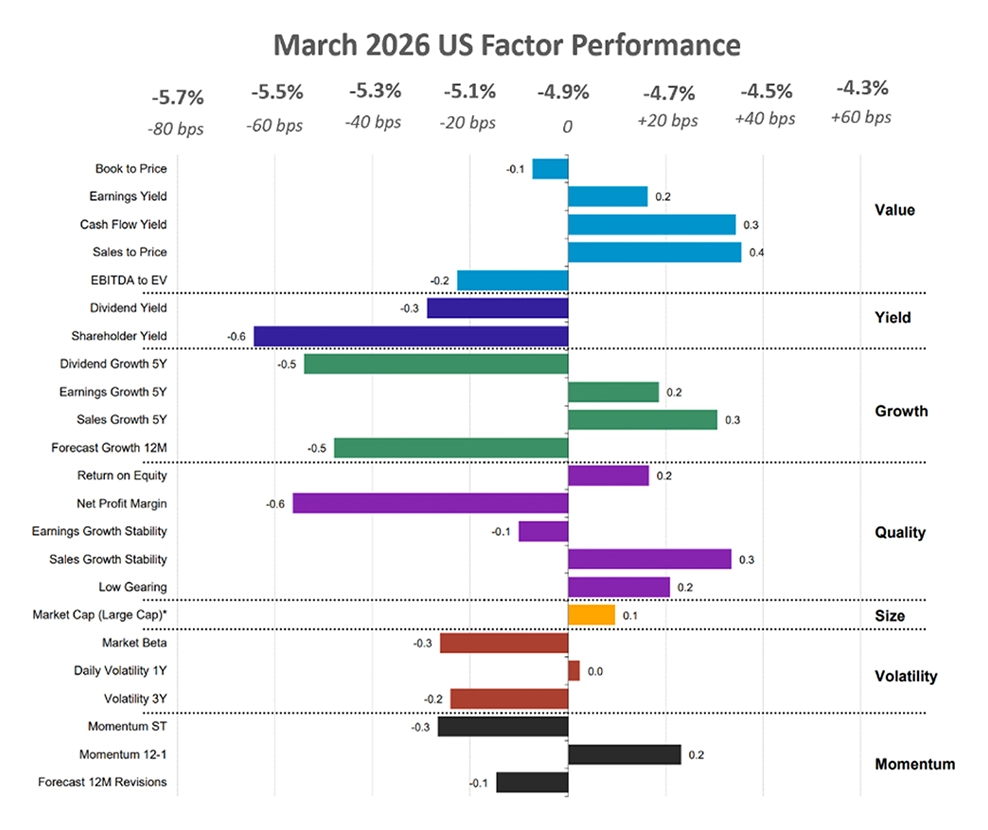
Figure 1: March 2026 US Factor Performance (sector adjusted)
Source: Confluence Style Analytics
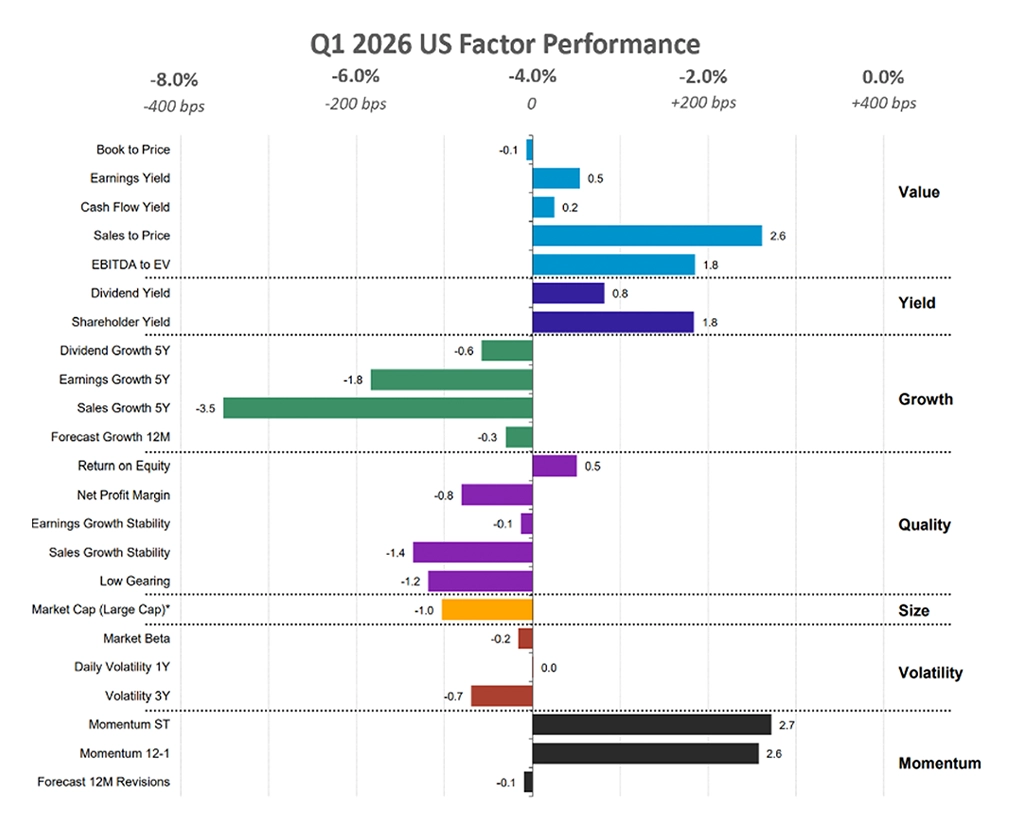
Figure 2: Q1 2026 US Factor Performance (sector adjusted)
Source: Confluence Style Analytics
European equities
European equities experienced a strong start to the year, with consistent outperformance in the first two months; however, a sharp reversal in March significantly altered the trajectory of Q1 2026. The region declined to -9. 9% in March, dragging overall quarterly performance into negative territory, with Q1 ending approximately -3.2%.
From a factor perspective, January was broadly strong, with all factors outperforming except Yield and Quality, contributing to a robust return of approximately 4.5%. However, February marked an early shift in investor sentiment, as overall factor performance moderated. During this period, Quality and Yield emerged as relative outperformers, even as the region’s overall performance weakened, though it remained positive. This trend extended into March, with Quality and Yield continuing to show relative resilience. Despite this, the region’s performance deteriorated sharply, primarily driven by significant underperformance in Volatility and Growth factors, which weighed heavily on the broader market.
The sharp decline in March was driven by rising inflation, uncertainty around monetary policy, and concerns over slowing economic growth, which weakened investor sentiment. Europe’s higher exposure to cyclical sectors further amplified losses, particularly in Growth stocks, while investors rotated toward more defensive factors such as Quality and Yield amid increased market volatility.
Annual inflation in the Euro area rose to 2.5% in March 2026 from 1.9% in February. Meanwhile, the unemployment rate increased to 6.2% in February.
Key European stocks with strong momentum 12-1 that outperformed in the first quarter of 2026 include German industrials company Siemens Energy AG (+16% in Q1) and Netherland info tech company ASML Holding (19% in Q1). Leading the market through a strong dividend yield performance in the month of March include German materials company BASF SE (5% in March) and Spanish utilities company Endesa SPA (2% in March).
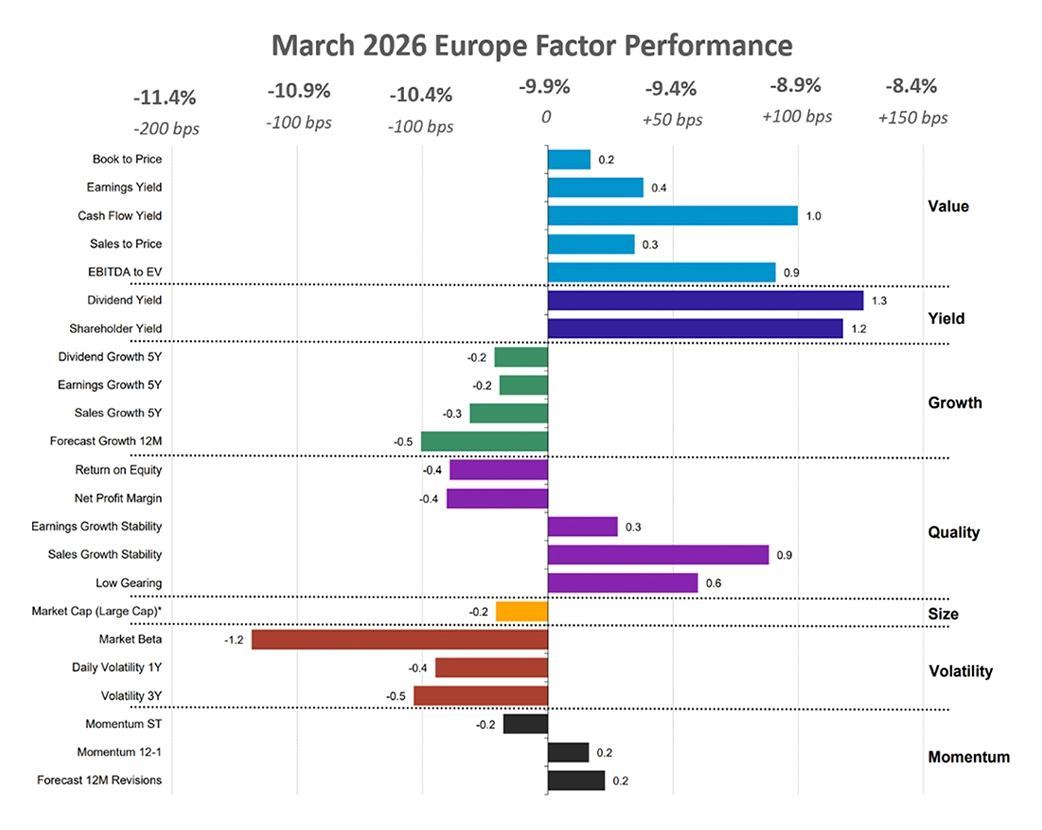
Figure 3: March 2026 Europe Factor Performance (country and sector adjusted)
Source: Confluence Style Analytics
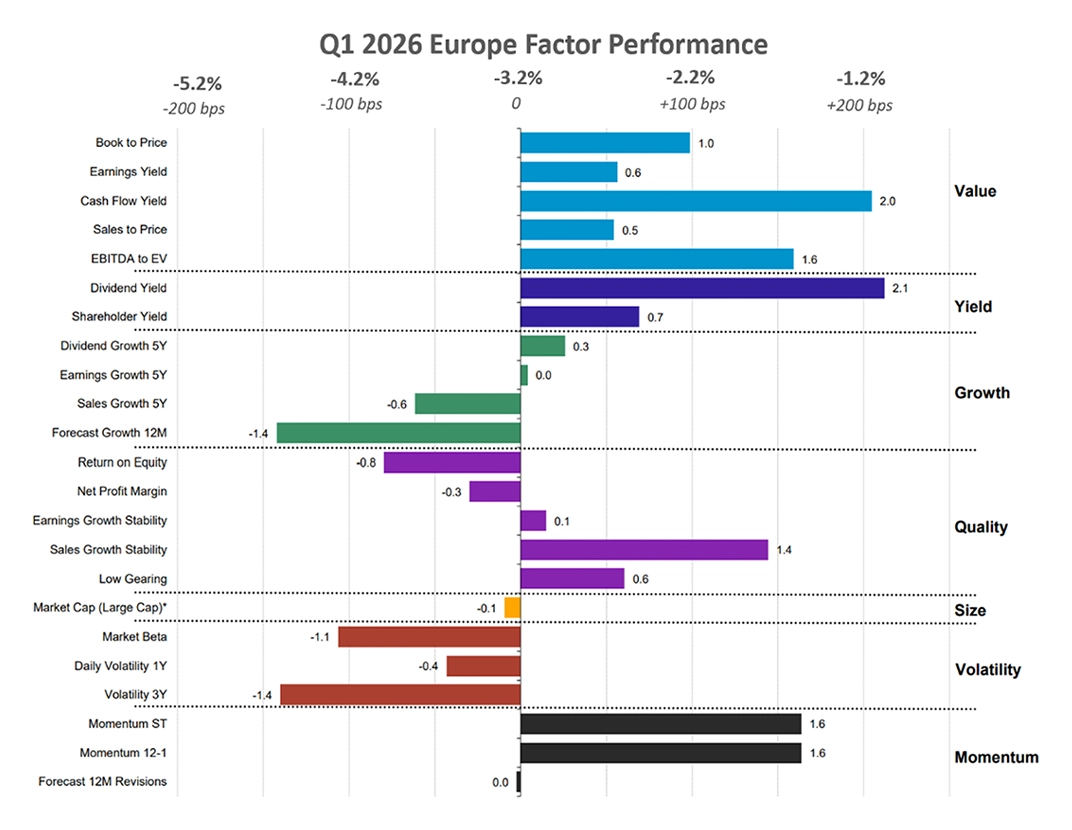
Figure 4: Q1 2026 Europe Factor Performance (country and sector adjusted)
Source: Confluence Style Analytics
UK equities
UK equities followed a similar pattern to other developed markets, with strong performance in the first two months of the year followed by a sharp reversal in March. After a modest gain of 3.2% in January, performance strengthened in February with an outperformance of 5.9%, before declining by 6.6% in March amid broader global market weakness.
From a factor perspective, March marked a clear shift in investor sentiment, with a rotation toward cheaper, higher-yielding, and higher-quality stocks. Despite the March downturn, the UK outperformed other developed regions such as the U.S. and Europe on a quarterly basis, delivering a positive return of approximately 2% for Q1 2026. Over the quarter, factor trends were broadly aligned with Europe, with Value, Yield, and Momentum emerging as the key areas of investor preference.
Investors in the UK shifted toward Value and Yield stocks due to persistent inflation and uncertainty around interest rate cuts, which increased the appeal of stable, income-generating companies. Additionally, attractive valuations in sectors like financials and energy encouraged a rotation away from more expensive growth stocks, especially amid heightened market volatility.
The UK’s annual inflation rate held steady at 3% in February 2026, unchanged from January. The unemployment rate also remained stable at 5.2% in the three months to January, while manufacturing production saw a modest month-on-month increase of 0.1% in January 2026.
British stock with strong cash flow yield that outperformed this month include energy company BP Plc (+25% in March). Stocks that led the region’s sales growth stability factor’s outperformance in Q1 include – materials company like RIO Tinto PLC (17% in March) and industrials company Bae Systems PLC (26% in March).
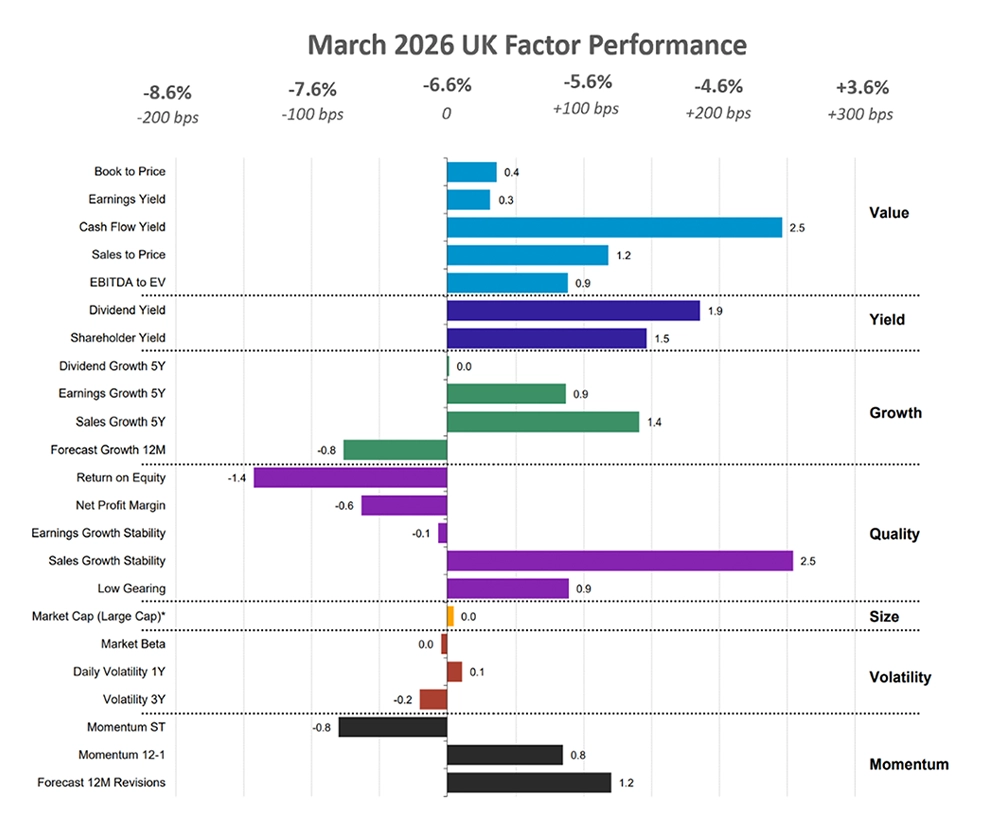
Figure 5: March 2026 Uk Factor Performance (sector adjusted)
Source: Confluence Style Analytics
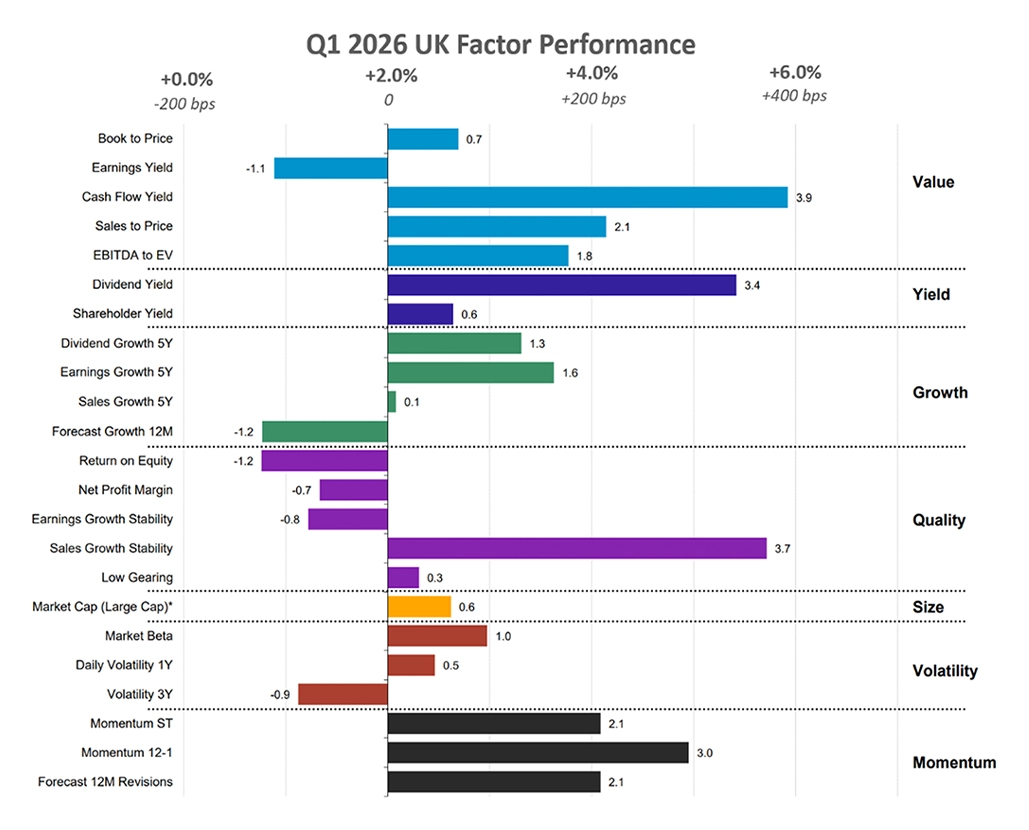
Figure 6: Q1 2026 UK Factor Performance (sector adjusted)
Source: Confluence Style Analytics
Emerging markets equities
Emerging markets experienced a strong start to the year, with solid performance in January and February, before a sharp reversal in March, when the region declined by approximately 13.4%. January was driven by strong contributions from high Volatility and Momentum stocks, supporting broad-based outperformance.
However, February marked a shift, as high Volatility stocks began to underperform and detracted from regional returns. This weakness intensified in March, with both Volatility and Momentum factors contributing negatively, alongside additional pressure from underperformance in large-cap stocks.
The weak performance in March was largely driven by a global risk-off environment, which tends to disproportionately impact emerging markets due to their higher beta and sensitivity to foreign capital flows. As investor sentiment turned defensive, high Volatility and Momentum stocks came under pressure, while concerns over global growth and tighter financial conditions further weighed on cyclical large-cap names.
China’s annual inflation eased to 1.0% in March 2026 from 1.3% in February, while the urban unemployment rate edged up to 5.3% in February from 5.2% previously. In India, inflation rose to 3.2% in February from 2.7% in the prior month, while the unemployment rate declined slightly to 4.9% from 5.0%. In Taiwan, inflation eased to 1.2% in March, and the seasonally adjusted unemployment rate improved to 3.3% in February from 3.4% in the previous month.
Emerging Markets equities that outperformed in the month of March, captured by the sales growth stability include a Chinese financials companies Agricultural Bank of China Ltd (4% in March); and Industrials and Commercial Bank of China (10% in March). Companies with progressing dividend growth 5Y in include Taiwanese info tech company Taiwanese Semiconductor Manufacturing Company (+12% in Q1) and Chinese energy company CNOOC Ltd (33% in March).
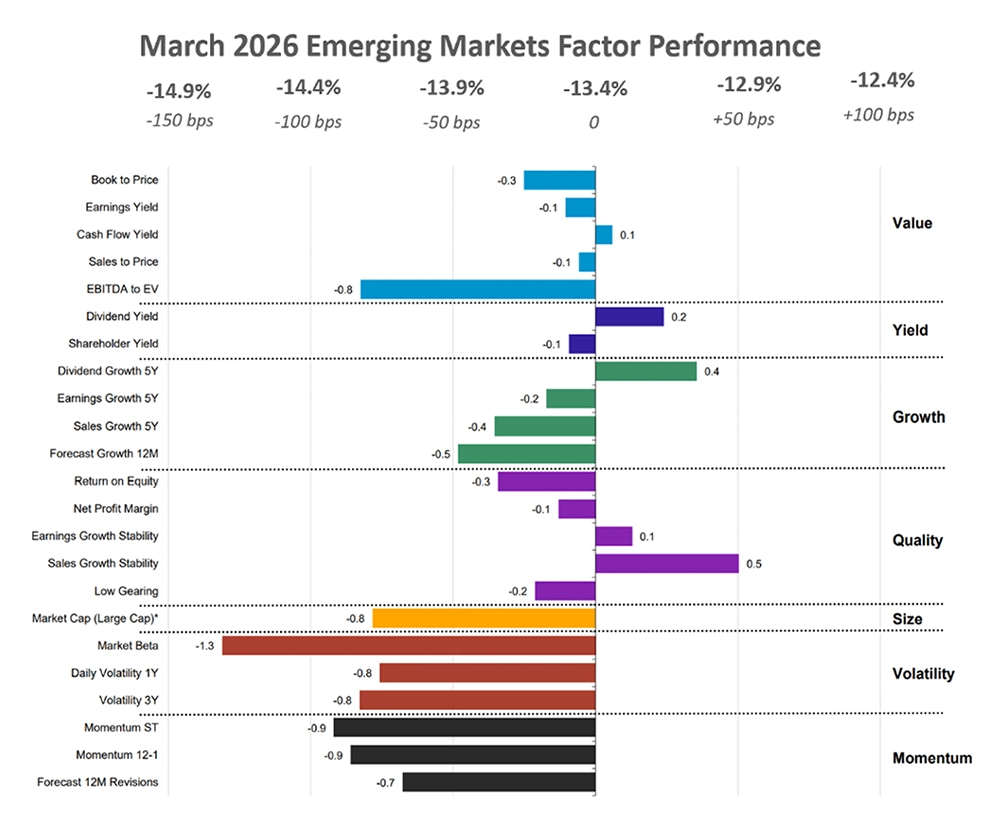
Figure 7: March 2026 Emerging Factor Performance (country and sector adjusted)
Source: Confluence Style Analytics
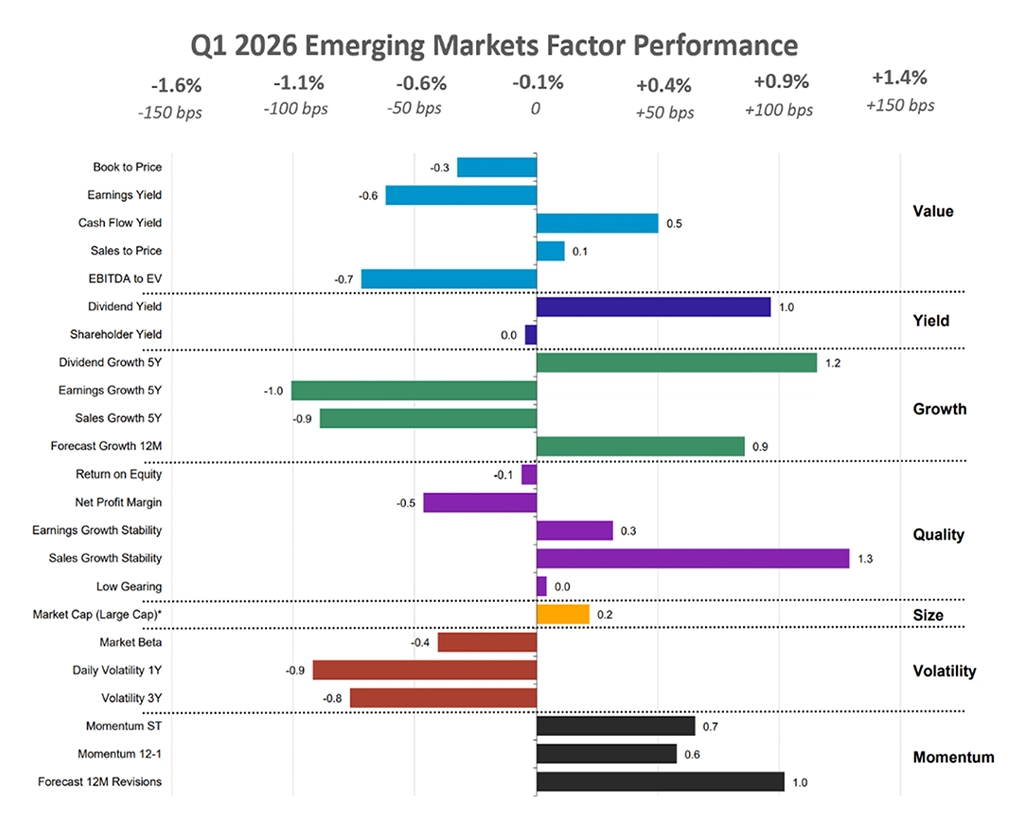
Figure 8: Q1 2026 Emerging Factor Performance (country sector adjusted)
Source: Confluence Style Analytics
Canadian equities
The Canadian equity market delivered strong performance in February, outperforming most developed and emerging markets and improving from a 2.3% return in the previous month. This outperformance was largely driven by Sales Growth (5Y), which emerged as the leading factor supporting market returns during the period. The region’s performance was further supported by Quality and Value factors, reflecting investor preference for companies with strong fundamentals and attractive valuations. As global markets experienced increased volatility and a rotation away from high-growth technology stocks, Canadian equities benefited from this factor environment.
Compared with the previous month, Momentum, Yield, and Volatility factors weakened in performance, similar to trends observed in other regions. In contrast, the Quality factor exhibited a reversal in trend in the opposite direction, showing improved performance during the period.
Canada’s underperformance in March was driven by a global risk-off environment, which weighed more heavily on its cyclical sectors such as energy, materials, and financials. This was further amplified by commodity price weakness and a rotation away from higher-beta exposures like Momentum and Volatility.
Canada’s headline inflation rate declined to 1.8% in February 2026 from 2.3% in the previous month. The unemployment rate remained unchanged at 6.7% in March, while manufacturing production fell by 4.2% year-over-year in January 2026.
Stocks with strong earnings yield in the region include energy company Canadian Natural Resources Ltd (+45% in Q1) and energy company Cenovus Energy Incorp (+57% in March). High EBIDTA to EV stocks that contributed to the region’s performance include energy company Suncor Energy Inc (18% in March) and info tech company Celestica Incorp (1.3% in March).
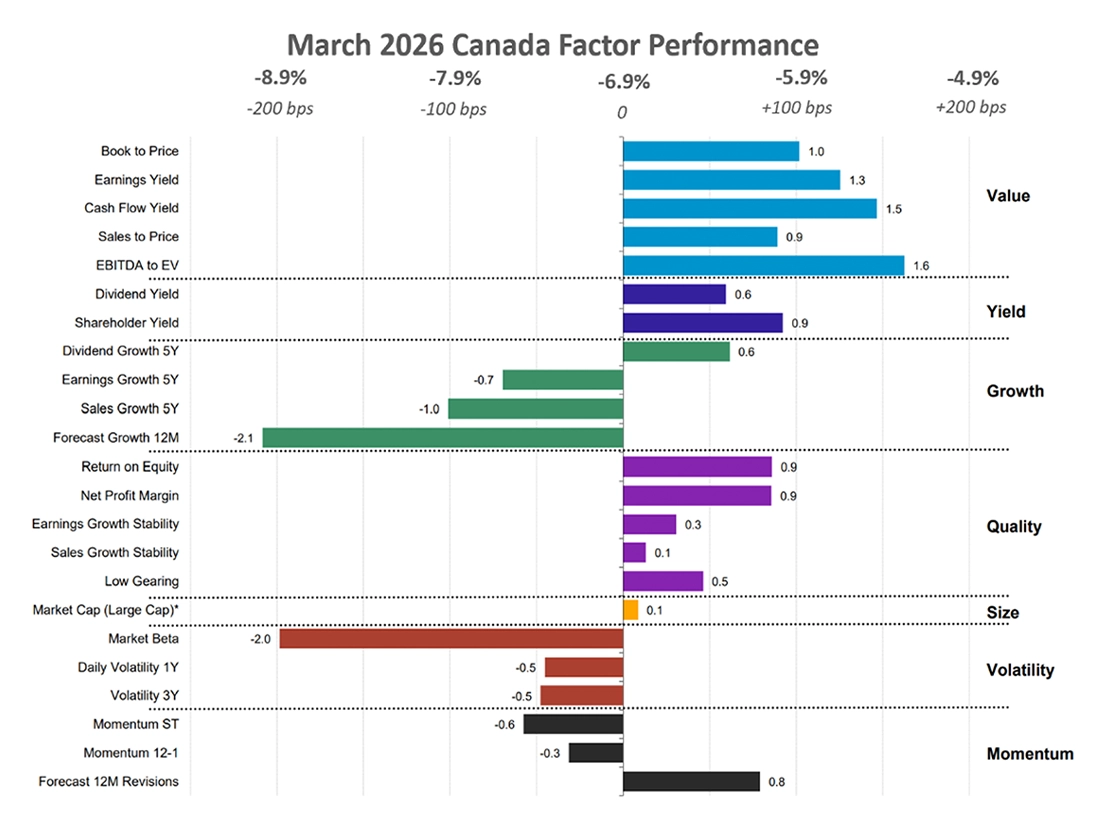
Figure 9: March 2026 Canada Factor Performance (sector adjusted)
Source: Confluence Style Analytics
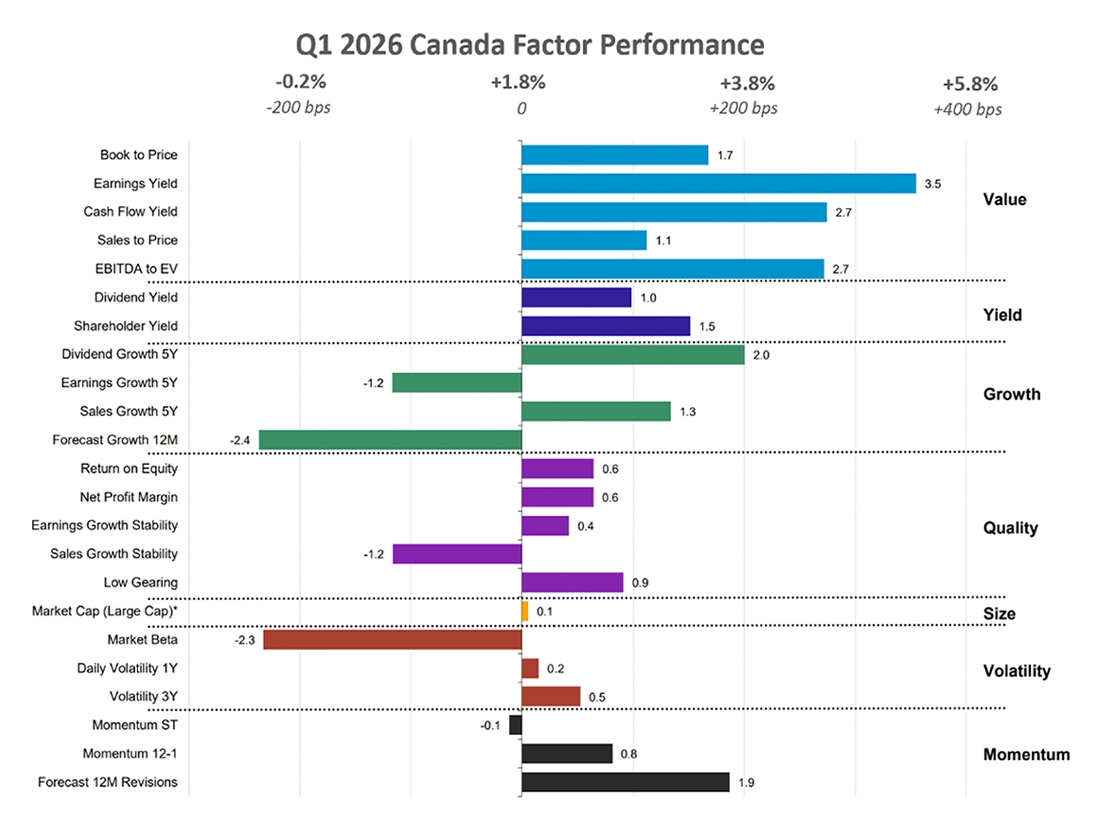
Figure 10: Q1 2026 Canada Factor Performance (sector adjusted)
Source: Confluence Style Analytics
Appendix: How to read the charts
Each factor’s performance is based on the relative performance of its top 50% of stocks by market cap, compared to the overall market. The Size factor uses the top 70% of stocks as the only exception.
For example, for the book-to-price factor, we determine the period’s performance of the basket of stocks with the highest book-to-price values relative to the total market. Each factor is analyzed independently, market and fundamental data are adjusted to enable sector-average (within each country) relative data to be used, and the performance measurement isolates the factor’s contribution to return.
Disclaimer
The content provided by Confluence® Technologies, Inc. is for general informational purposes only and does not constitute legal, regulatory, financial, investment, or other professional advice. It should not be relied upon as a substitute for specific advice tailored to particular circumstances. Recipients should seek guidance from appropriately qualified professionals before making any decisions based on this content.
Unless otherwise stated, Confluence Technologies, Inc. (or the relevant group entity) owns the copyright and all related intellectual property rights in this material, including but not limited to database rights, trademarks, registered trademarks, service marks, and logos.
No part of this content may be adapted, modified, reproduced, republished, uploaded, posted, broadcast, or transmitted to third parties for commercial purposes without prior written consent.
About Confluence® Technologies
Confluence is a leading global technology solutions provider committed to helping the investment management industry solve complex data challenges across the front, middle, and back offices. From data-driven portfolio analytics to compliance and regulatory solutions, including investment insights and research, Confluence invests in the latest technology to meet the evolving needs of asset managers, asset owners, asset servicers, and asset allocators to provide best-of-breed solutions that deliver maximum scalability, speed, and flexibility, while reducing risk and increasing efficiency. Headquartered in Pittsburgh, PA, with 750+ employees in 15 offices across the United Kingdom, Europe, North America, South Africa, and Australia, Confluence services over 1000 clients in more than 40 countries. For more information, visit confluence.com