

Travel and tourism in 2024
Rebound after the pandemic
The pandemic paused global exploration, but 2024 is hitting fast forward. Let’s unpack the trends, challenges, and opportunities shaping the Travel and Tourism industry.
This industry offers various services to cater to travellers, including package holidays, hotel accommodations, food and beverage establishments, air transport, online booking platforms, adventure and leisure experiences, vacation rentals, and car rentals.
According to a market report on “Travel and Tourism” by Statista, revenue is estimated to reach US$916 bn by 2024 and is projected to grow annually at a rate of 3.99%, resulting in a market volume of US$1,114 bn by 2029.
With digital content on platforms like Facebook, Instagram, and TikTok and the ease of bookings, travel has gained a boost. In the upcoming years, due to the growing aging population around the world with more disposable income, there is an expectation of a sharp rise in travel in this segment. Solo tourism and family tourism also contribute to industry growth.
Statistics from official websites of various economies worldwide indicate an increasing trend in travel spending. According to a report by the World Economic Forum, Travel and Tourism Development Index 2024, Europe and Asia-Pacific and high-income economies continue to have the most favourable conditions for the travel and tourism sector. The highest-ranked economies for tourism are the United States, Spain, Japan, France, Australia, Germany, the United Kingdom, China, Italy, and Switzerland. The following countries have a significant share of their GDP in tourism:
| Country | Percentage of GDP | Source |
|---|---|---|
| United States | 2.90% | International Trade Administration |
| Spain | 11.60% | Instituto Nacional de Estadistica |
| France | 8.00% | France Diplomacy |
| Italy | 10.50% | World Economic Forum |
| Switzerland | 5% | EHL Highlights |
Performance of major players
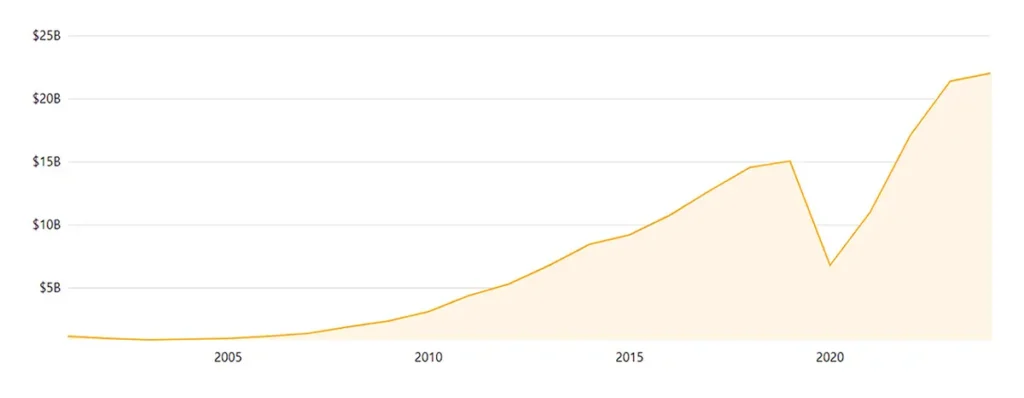
Examining Booking.Com’s journey, the company that started in 1996 in Amsterdam has grown substantially since 2015. Today, it is one of the biggest players in the industry.
Revenue history for booking holdings (Booking.com) from 2001 to 2024
Source: Companiesmarketcap.com
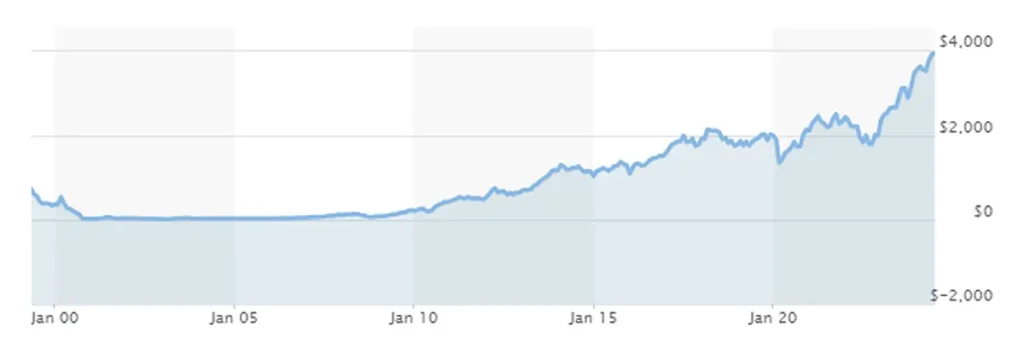
Share price growth of Booking.com
Source: MarketWatch
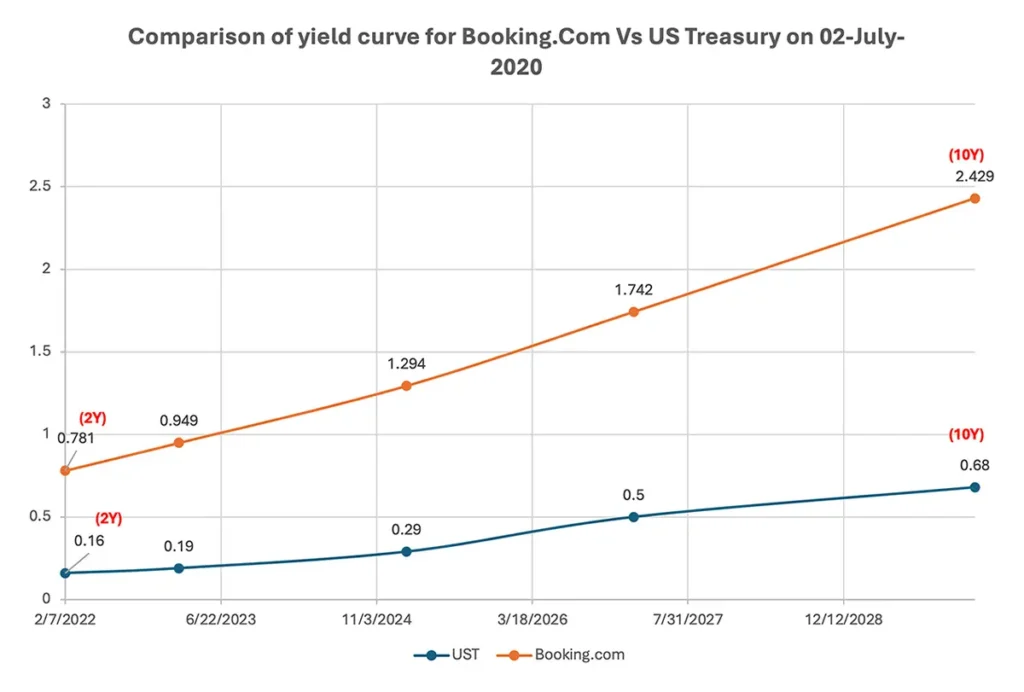
Source: Confluence Global Data Services,
2020 UST rates source: U.S Department of the Treasury
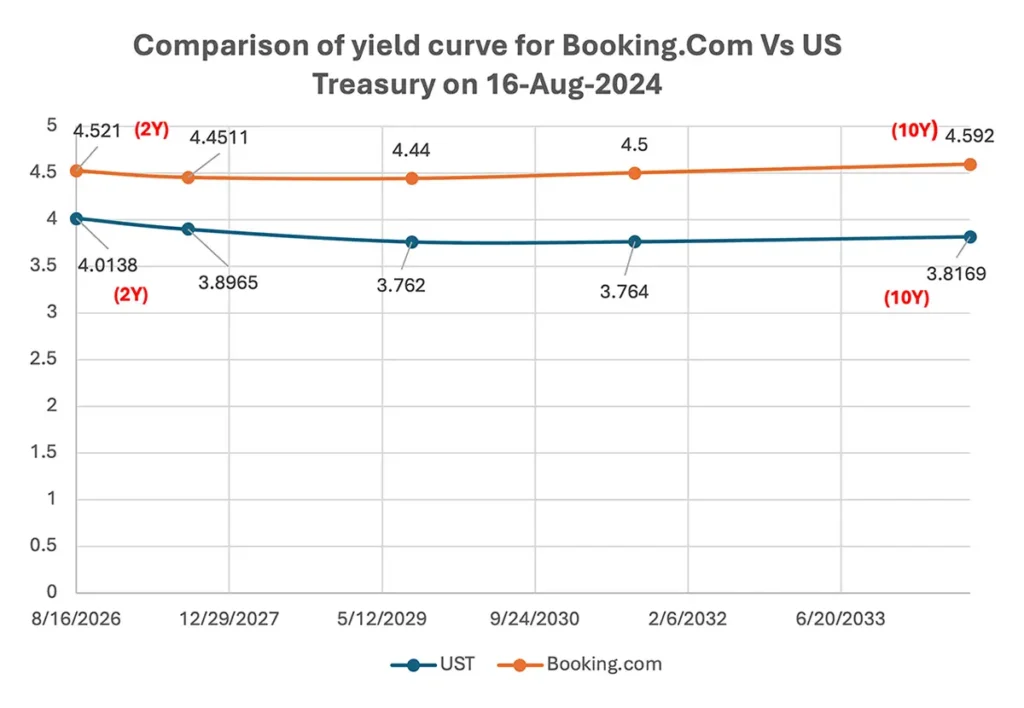
Source: Confluence Global Data Services
Source: Confluence Global Data Services
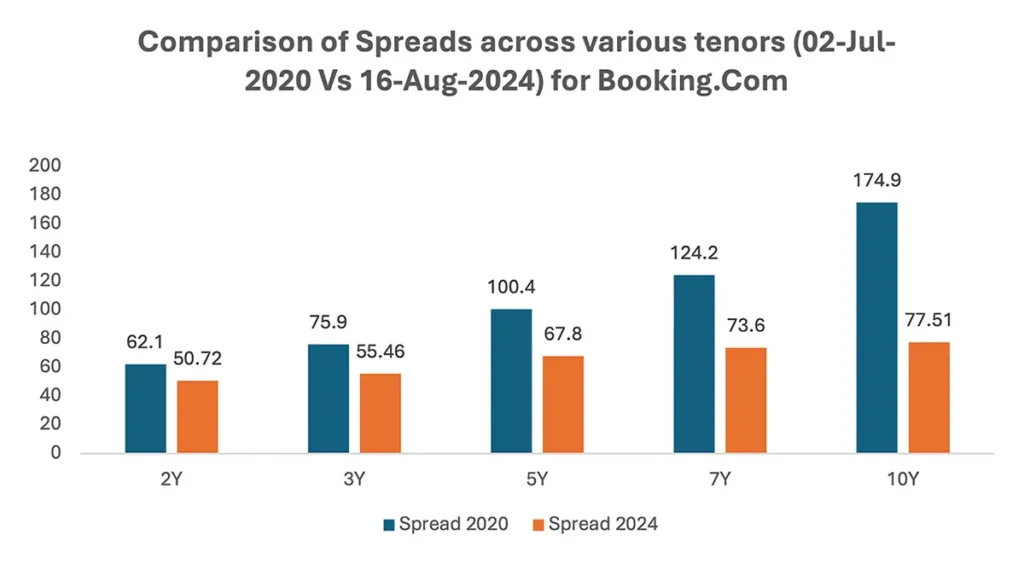
As per the above graph, based on our in-house data, we’ve observed the decline of a spread in 2024. This decrease suggests:
- Robust market confidence is driven by the company’s strong market position
- The company has benefitted from advancements in technology and AI and the shift in consumer behavior towards digital solutions.
- Their initiatives to enhance user experience and expand globally have further solidified investor trust.
- The overall recovery in the sector post-pandemic has positively impacted credit spreads, signaling stability and growth potential.
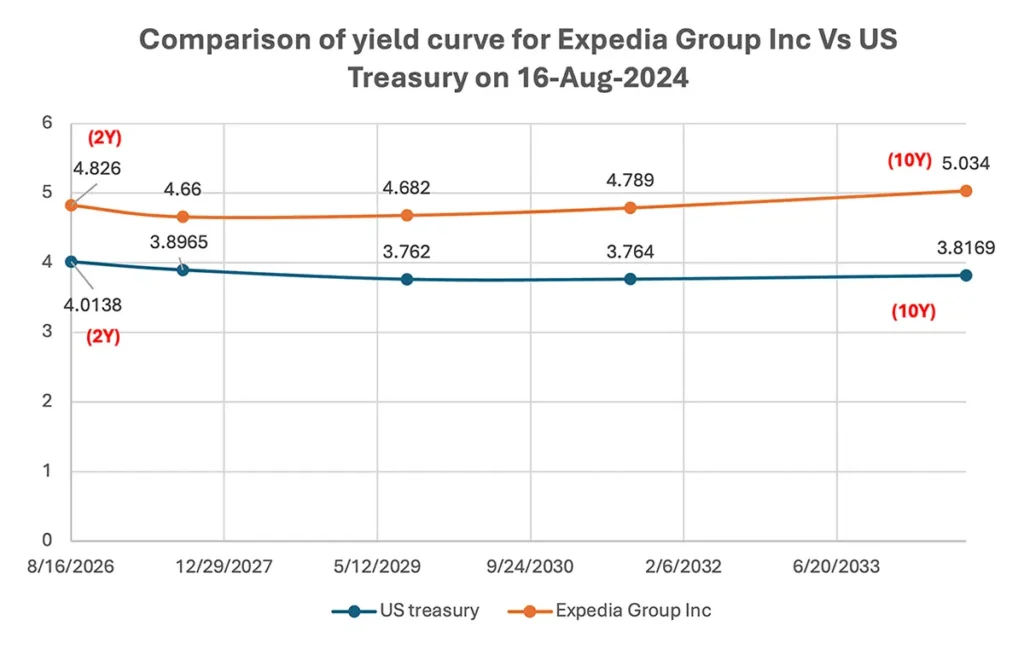
A similar company, Expedia Group Inc., founded in 1996, has a low credit spread in August 2024, signaling investor confidence and stability for the company.
Source: Confluence Global Data Services
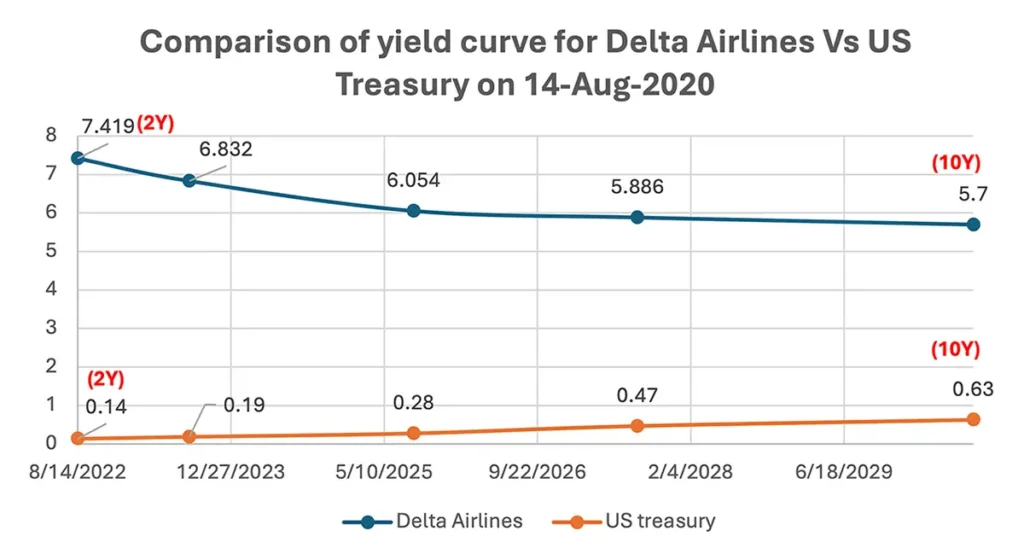
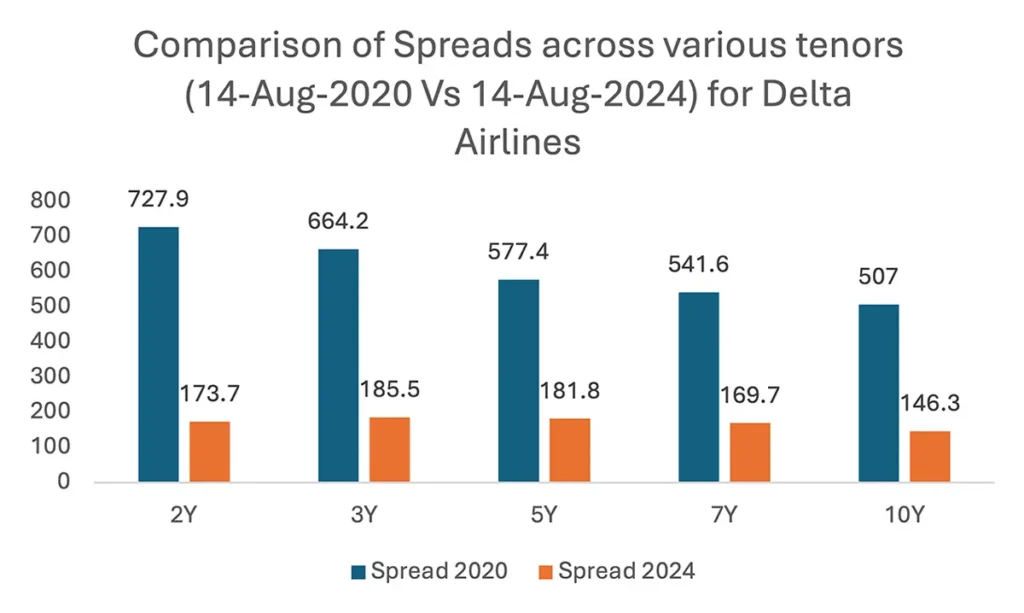
Let’s look at a major company in the airline sector, Delta Airlines Inc.
Source: Confluence Global Data Services,
2020 UST rates source: U.S Department of the Treasury
Source: Confluence Global Data Services
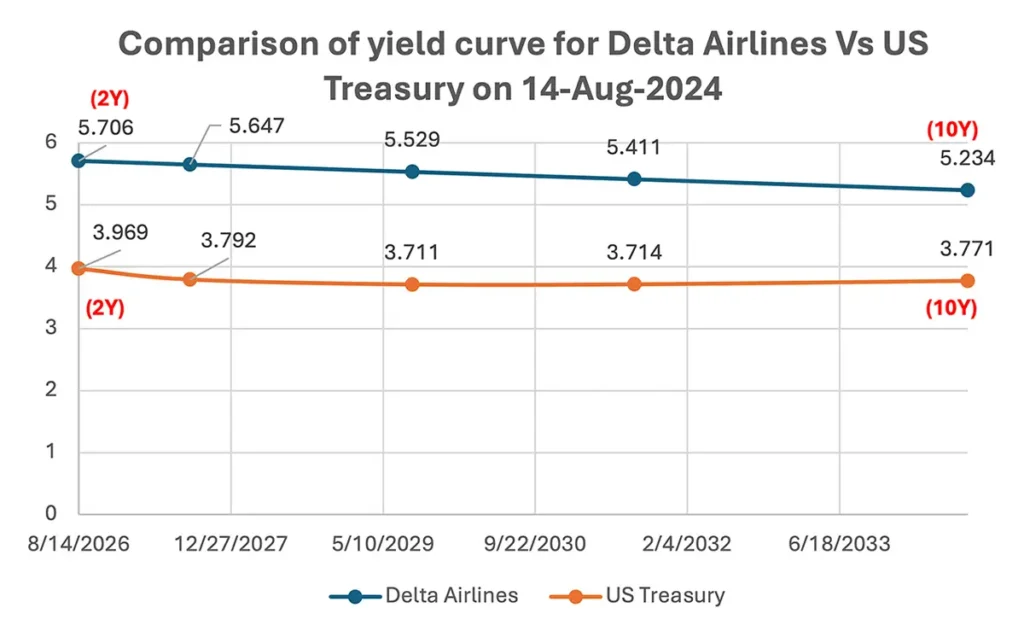
In 2020, the airline industry suffered a major setback, as it was almost shut down due to the pandemic. The spread for Delta Airlines rose to a high of around 727 bps for a two-year tenor. The drastic drop in the spread in 2024 may indicate the optimism of the market for the industry despite a major setback due to the pandemic.
Source: Confluence Global Data Services
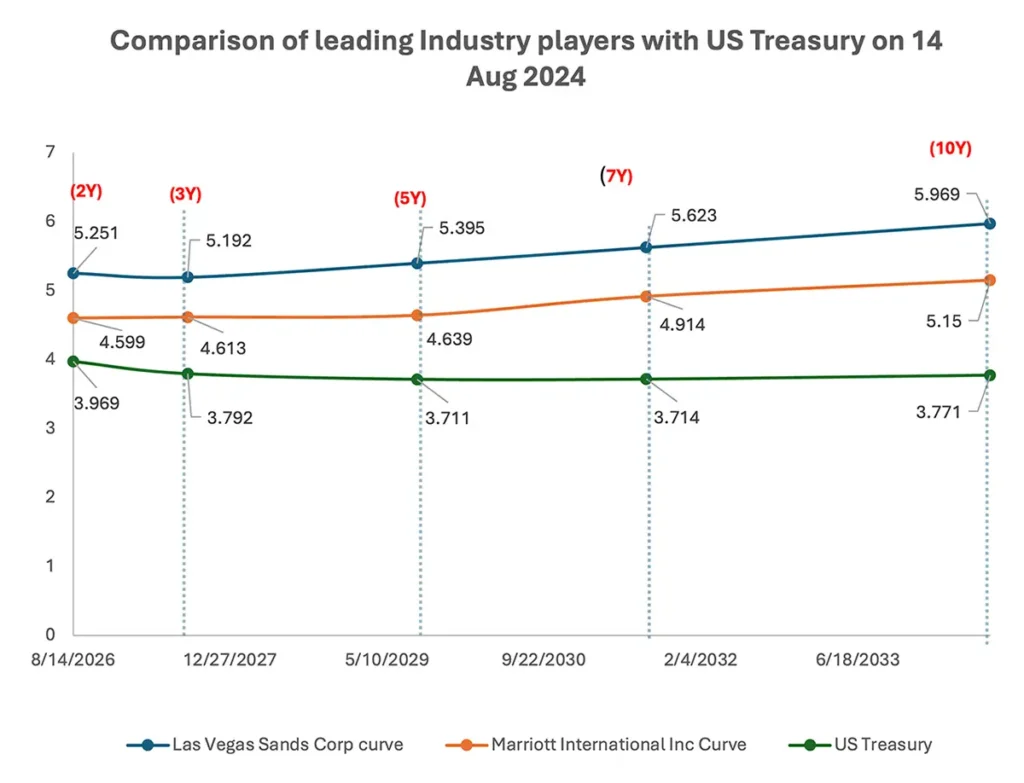
Examining other major players like Marriott International Inc. and Las Vegas Sands, we can see that their curves similarly reflect the story of growth and market confidence.
Source: Confluence Global Data Services
Most industries faced a similar downfall during the pandemic, but the travel and tourism sector was among the hardest hit. With halted operations, clouds of uncertainty, and fear of traveling among people, it was difficult to predict the future of the industry. However, current statistics propose that the industry is strong and stable, with more innovation expected in the coming years.
Performance in emerging markets
There are some more rising companies from the emerging market. For instance, OYO hotels and homes started in 2012 in India. OYO operates a network of leased and franchised hotels, homes, and living spaces. OYO has also been involved in developing technology solutions for the hospitality industry, including apps and platforms that facilitate booking and management for both customers and property owners. The company had a revenue of US$ 650 million in FY 23. However, as per a report by Pymnts, pre-pandemic, the company was operating in 80 countries around the world; however, due to COVID-19 losses, they had to scale back their international ambitions. Recently, for fiscal year 2023-24, OYO posted its first annual profit as per a post by CEO Ritesh Agarwal on X. OYO is expected to launch an IPO soon in India.
With rising disposable incomes in the decades to come boosting the propensity to travel in the Asia Pacific region, there is an expectation of huge growth in inbound and outbound tourism in the region.
The industry has still not fully recovered to pre-pandemic levels but is on the path of growth and expansion. As we can see from the growth of companies like Airbnb, Booking.com, and OYO, they introduced technology in the travel industry to ease the travel process for people around the world.
Current challenges faced by the sector
The industry is still facing various challenges:
- Inflation has hit all major economies of the world, which is impacting the sector.
- Due to the introduction of virtual meetings, business travel has reduced, and it’s difficult to predict whether it will return to pre-pandemic levels.
- Geopolitical situations have also affected the industry. For example, the ongoing tension in Ukraine is affecting tourism in Europe, the region with one of the highest summer inflows.
- Local communities are protesting against mass tourism, such as the recent anti-tourism protest in Barcelona.
The tourism sector is responsible for 8% of world carbon emissions. With the world shifting towards sustainability, the industry is under pressure to rediscover travel as sustainable. According to the United Nations World Tourism Organization, sustainable tourism aims to create a balanced approach where the needs of tourists, host communities, and the environment are all considered, ensuring that tourism remains a positive force for the destinations and people involved. The challenge is to achieve net zero emissions with growth and profitability.
Conclusion
In the last 20 years, there has been a great revolution in the industry, shifting from offline channels to online channels. It is time to look at a new segment – Sustainable tourism. As per market research report on sustainable tourism by Future Data Stats, the global sustainable Tourism market size was valued at USD 158.50 billion in 2023 and is projected to expand at a CAGR of 13.2% during the forecast period, reaching a value of USD 338.90 billion by 2030.
The results of the Travel and Tourism sector analysis are characterized by a mix of strong demand growth and overcoming challenges. Given the sector’s increasing economic contribution, it must take action to work towards sustainability, putting local communities at the center of development, increasing travel openness, and ensuring the responsible and safe adoption of technology.
Disclaimer
The content provided by Confluence Technologies, Inc. is for general informational purposes only and does not constitute legal, regulatory, financial, investment, or other professional advice. It should not be relied upon as a substitute for specific advice tailored to particular circumstances. Recipients should seek guidance from appropriately qualified professionals before making any decisions based on this content.
Unless otherwise stated, Confluence Technologies, Inc. (or the relevant group entity) owns the copyright and all related intellectual property rights in this material, including but not limited to database rights, trademarks, registered trademarks, service marks, and logos.
No part of this content may be adapted, modified, reproduced, republished, uploaded, posted, broadcast, or transmitted to third parties for commercial purposes without prior written consent.
About Confluence® Technologies
Confluence is a global leader in enterprise data and software solutions for regulatory, analytics, and investor communications. Our best-of-breed solutions make it easy and fast to create, share, and operationalize mission-critical reporting and actionable insights essential to the investment management industry. Trusted for over 30 years by the largest asset service providers, asset managers, asset owners, and investment consultants worldwide, our global team of regulatory and analytics experts delivers forward-looking innovations and market-leading solutions, adding efficiency, speed, and accuracy to everything we do. Headquartered in Pittsburgh, PA, with 700+ employees across North America, the United Kingdom, Europe, South Africa, and Australia, Confluence services over 1,000 clients in more than 40 countries. For more information, visit www.confluence.com.